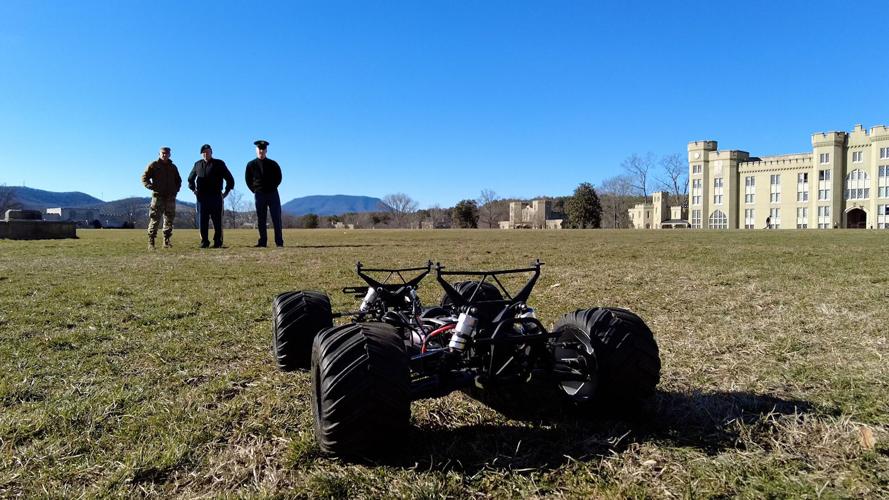


Ticks’ ability to spread Lyme disease and other illnesses is fast being stymied by the efforts of researchers and cadets at Virginia Military Institute.
Introducing: tick rover.
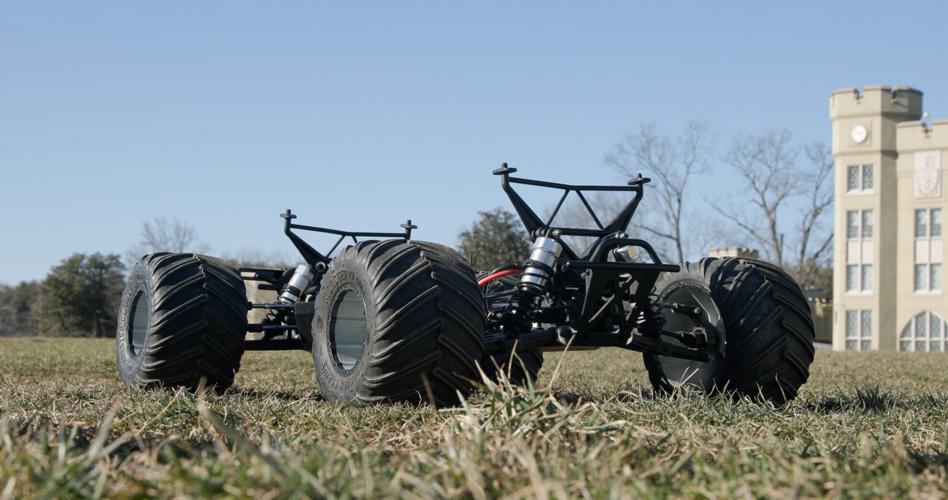
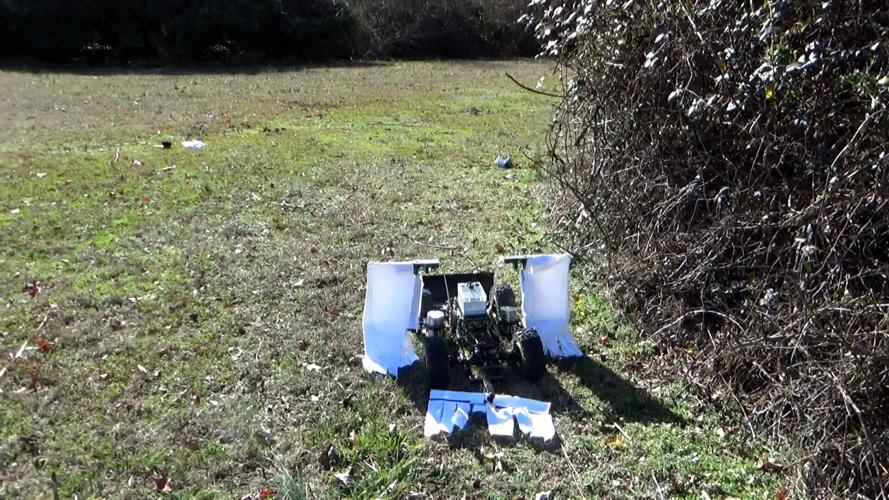
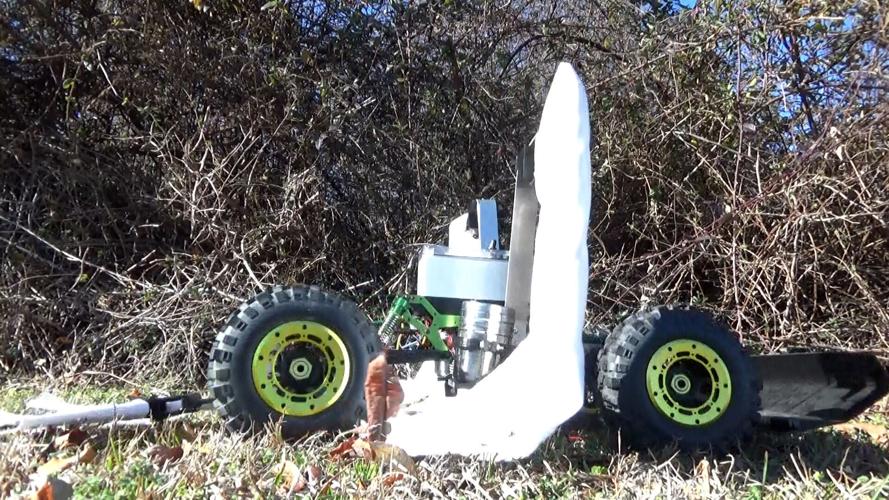
The size of a small dog, this handy little carbon dioxide-emitting robot combs through grassy areas, picks up ticks and quickly kills them. The unusual invention is the brainchild of Jay Sullivan and Jim Squire, both professors at the Virginia-based military college. Sullivan is a mechanical engineering professor and Squire is an electrical and computer engineering professor.
“These days, almost everyone knows someone who’s been afflicted with a tick-borne illness,” Sullivan said. “From Lyme disease to alpha gal syndrome, these tiny parasites cause an outsize amount of human suffering.”

The tick rover drags permethrin-coated cloths through grassy areas, picks up ticks, and quickly kills them.
Before the rover, Sullivan said the only solution was to either stay indoors or use a toxic insecticide, permethrin, that’s been linked to a number of serious health effects in humans and animals.
Given the small classes at the Institute — enrollment is approximately 1,500 — inter-departmental collaborations are common. Over the last 20 years, Sullivan and Squire have brought dozens of cadets on board to help with research on the unusual invention. Holly Gaff, Ph.D., professor of biological sciences at Old Dominion University, also joined forces with the team as they repeatedly put the tick rover through rigorous testing. In fact, Gaff’s published work on the project reported an 85% to 95% successful tick density removal rate.
“At VMI our motto is learning by doing. Inviting these engineering students to help with this project emphasizes just that."
Jay Sullivan - Professor of Mechanical Engineering

Over the past 20 years, Sullivan and Squire have brought dozens of cadets on board to help with their research—an important step because all VMI’s engineering programs emphasize learning by doing.
“At VMI our motto is learning by doing,” Sullivan said. “Inviting these engineering students to help with this project emphasizes just that. What’s more, some of these cadets are listed as primary authors on the tick rover’s patents, an amazing feat for undergraduates.”
Sullivan and Squire have challenged the cadets to tweak the rover’s performance to make it more user-friendly. In spring 2020, their efforts paid off when the tick rover won national recognition at a contest sponsored by the Institute of Electrical and Electronics Engineers, qualifying the team for an all-expense-paid trip to compete at the international level in Spain. While the trip was unfortunately cancelled due to the pandemic, the students still reaped the benefits of the project.

VMI is partnering with the University of Florida’s CDC Center for Excellence to test the rover at 25 sites ranging from as far north as Massachusetts to as far south as Florida.
“I came to VMI with the passion for wanting to do projects that are hands-on, applying what I’m learning in the classroom right away.”
Joseph Lieber - VMI class of 2023
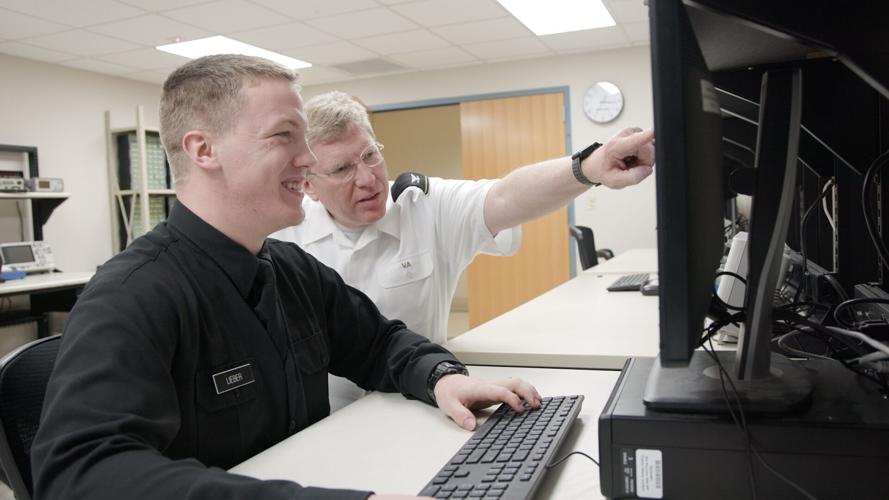
For Joseph Lieber, VMI class of 2023, the project has been an incredible learning experience. “I came to VMI with the passion for wanting to do projects that are hands-on, applying what I’m learning in the classroom right away,” said Lieber, who is now in his fourth year of rover research. “For me, the rover is the perfect example of what makes engineering a true helping profession. I see that light at the end of the tunnel and how this invention can benefit someone’s life. You want to build something that helps someone and, potentially, make their quality of life that much better. And I’m part of that effort.”

The tick rover kills ticks without leaving a high level of insecticide behind.
This summer, the tick rover’s testing will move to the national level. VMI is partnering with the CDC Southeastern Center of Excellence in Vector Borne Diseases at the University of Florida to test the rover at 25 sites from Massachusetts to Florida.
So, from larva to nymph to adult: ticks beware. The tick rover is on its way.
Apply today at vmi.edu or call 540-464-7211.
Take a look at what else is happening at VMI in the Richmond Times-Dispatch.