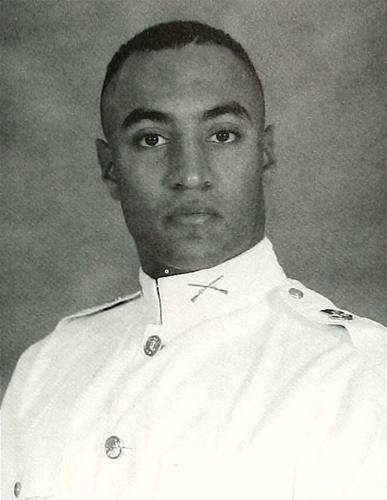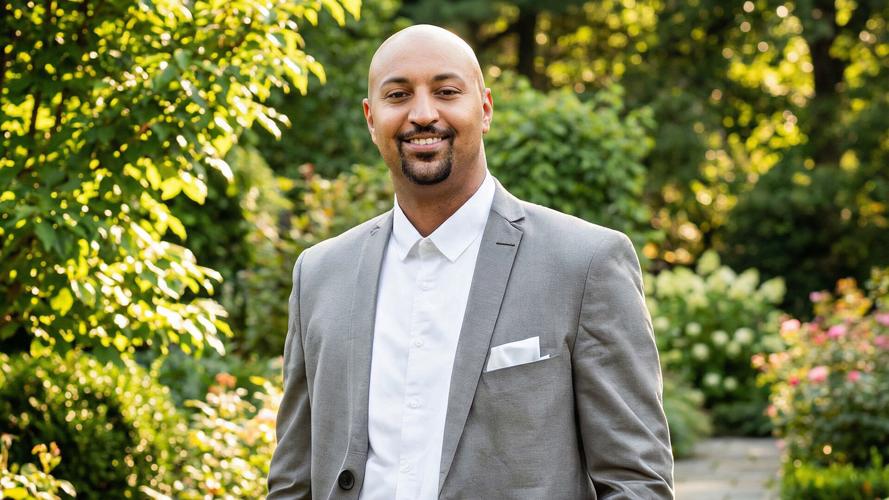


Jamel Lynch, a Virginia Military Institute alumnus, said the demanding nature of VMI’s education forged a “don’t quit” attitude that has served him well. “One of my strengths is that I rarely give up on solving problems. That ‘stick-to-itiveness’ I learned in barracks (at VMI) has never let me down.”
“Alumni never quit. They always push forward and go past the mark. They are honorable. They embrace challenges, and they aren’t afraid to take calculated risks. They go out and do.”
- Jamel Lynch, VMI Graduate
In summer 1989, Jamel Lynch traveled across the mountain from his home in Lynchburg, Virginia, to attend the College Orientation Workshop, a program for male, minority high schoolers at risk of not achieving their full potential. It just so happens that the workshop is held each year at Virginia Military Institute, a college renowned for the success of its graduates in both military and civilian careers.
A year later, Lynch began his studies at VMI, graduating in 1994 with a bachelor’s degree in electrical engineering. Today, he’s an entrepreneur who runs both a technology company and a beer distribution business, and he credits his success to his VMI education. VMI is unique in that the students, known as cadets, have little free time and follow a strict schedule each day. For Lynch, that regimented lifestyle pushed him to excel.
“I was never satisfied with simply meeting expectations,” he said. “The intensity of the experience drove me to continuously improve.”
After VMI, Lynch chose to continue his education, enrolling in a master’s degree program at Virginia Tech. There, he felt more than well-prepared. “The academic rigor and disciplined approach to learning [at VMI] instilled in me a strong work ethic and an ability to manage my time effectively,” he said. “The challenging coursework had taught me how to tackle complex problems and think critically, which made the transition to graduate school smoother.”

Lynch began his studies at VMI, graduating in 1994 with a bachelor’s degree in electrical engineering. Today, he’s an entrepreneur who runs both a technology company and a beer distribution business, and he credits his success to his VMI education.
Then, it was off to a position at IBM, where he helped integrate wireless technologies such as Bluetooth and wireless wide area networking into IBM’s ThinkPad systems. Later, he worked for another IT firm, Lenovo, where he established the company’s presence in 70 countries, including 50 in Africa, before moving on to Belden, Inc., where he led the company’s first North American technical services department.
In July 2013, Lynch struck out on his own and established Nfinite Technologies, which provides business and technology services related to business continuity, remote workforce utilization and virtual client engagement. Not content to excel in only one area, Lynch established HB Distributing, specializing in the distribution of craft beer, in 2018.
Over the years, many accolades have come Lynch’s way, among them being named IBM’s Engineer of the Year and receiving the company’s President’s Award for Continuous Improvement in Engineering. He was also the keynote speaker at a World Bank conference in Kigali, Rwanda.
The demanding nature of VMI’s education, he believes, forged a “don’t quit” attitude that has served him well. “One of my strengths is that I rarely give up on solving problems. That ‘stick-to-itiveness’ I learned in barracks [at VMI] has never let me down.”
It’s a character trait Lynch has observed over and over again in his fellow VMI alumni. “Alumni never quit,” he said. “They always push forward and go past the mark. They are honorable. They embrace challenges, and they aren’t afraid to take calculated risks. They go out and do.”
Even as a mid-career entrepreneur juggling two businesses, Lynch has found a way to give back to his community. He’s involved with the Southeastern Efforts Developing Sustainable Spaces, or SEEDS, which is a 2-acre urban garden and kitchen classroom in Durham, North Carolina, that introduces youth to growing, cooking and sharing food, as well as Big Brothers-Big Sisters of Durham. “In my youth, I spent a lot of time on a family farm, which taught me the value of hard work, and I had limited resources, which taught me the value of community support,” Lynch said. “Engaging in charitable activities, therefore, is a way to help others who may be facing obstacles like those I experienced. I believe that everyone deserves a chance to thrive, and through service, I can help give it to them.”
To learn more, visit vmi.edu/neversettle.