

Last month’s bitter cold temperatures made for challenging times in Virginia. For Dominion Energy, they presented a challenge as well: Over a three-day period, demand for electricity set three all-time records.
Before January, the top six all-time peaks for energy use were set this past summer. In fact, the top 30 all-time summer peaks in the region Dominion Energy serves have all been set since 2022.
This trend of increasing demand will only continue in the coming years, and the pace is accelerating. Projections show demand for electricity rising at a rate not seen since the period after World War II. Specifically, power demand in Dominion Energy’s Virginia transmission service area is projected to grow 5.5% annually for the next decade, and to double by 2039.
There are many reasons for this. For starters, by 2040 Virginia’s population is expected to grow from 8.7 million people to 9.7 million. Add to that economic growth; the increasing use of data by individuals, families and businesses; and the electrification of transportation and industry, and it’s no surprise that the state will need more energy, and lots of it.
Regardless of the reasons, this much is clear: Virginia needs to meet this growing demand. Leaving people without power is simply not an option.
It’s also the key to progress. Expanding the electric system will provide the energy that will propel the state forward — enhancing prosperity, powering innovation and ensuring that the commonwealth’s best days are yet to come.
To meet that demand, though, will require multiple sources of energy. No single power source, grid solution or energy-efficiency program is enough to match the need. Extensive analysis shows that only an all-of-the-above approach will provide enough expanded capacity to keep pace with a growing commonwealth — one that supports families, encourages business, expands basic services, and gives people the resources and opportunities they need to thrive.
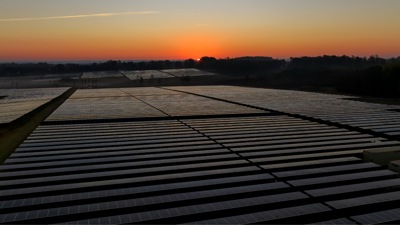
What does an all-of-the-above approach look like? In Dominion Energy’s latest long-term plan for Virginia, it looks like more offshore wind — 3,400 megawatts of it, on top of the 2,600-megawatt Coastal Virginia Offshore Wind commercial project currently under construction. It includes more solar, to the tune of 12,000 megawatts — a 150% increase over what’s currently in operation or development, and enough to power 3 million homes. It involves more battery storage (around 4,500 megawatts) and small modular nuclear reactors, beginning in the mid-2030s.
All told, nearly 80% of the new power generation in the long-term plan is carbon-free. The remaining 20% would come from natural gas, including Dominion Energy’s proposed Chesterfield Energy Reliability Center. As people lean into the clean-energy transition, natural gas will make it possible to add more renewables by providing a critically important source of reliable backup power when the weather doesn’t cooperate with wind and solar.
Adding these resources will ensure that enough reliable, affordable, increasingly clean energy will be available to power customers every day — no matter what the day might bring. It also will help to continue to cut carbon emissions — which Dominion Energy has already reduced by 53% from 2005 through 2023. Reducing greenhouse gas emissions is part of our commitment to sustainability and the environment, and Dominion Energy is determined to keep building on the progress they’ve made.
The environmental benefits of an expanded grid extend beyond Dominion Energy’s operations. As transportation, industry, and other sectors of the economy shift from fossil fuels to electric power, a larger, greener supply of electricity will help smooth their transition to the clean-energy future.
An enhanced electric system brings other advantages, too. They include more energy jobs for up-and-coming workers. They include added revenue for local governments and the state to fund important public services. More generation and more transmission also are key to meeting the energy needs of current businesses so they can expand and hire more workers, and to power the opportunities of a growing economy in the future.
Virginia is on the move. And there’s no limit to how far the state can go so long as it has the energy required to continue that progress. A growing state needs a growing electric system — and Dominion Energy is here to provide it.
Molly Parker is the Vice President of Environmental and Sustainability at Dominion Energy, where she leads the company's sustainability initiatives and ensures compliance with environmental regulations. Since joining Dominion Energy in 2007, Molly has played a key role in advancing sustainability, environmental permitting and compliance, and climate policies.