

A briefly racing heart from strong emotion, exercise or even too much caffeine usually isn’t cause for concern, but a pattern of abnormal heart rhythms called atrial fibrillation, or AFib, can lead to serious complications. AFib can cause blood clots, stroke and heart failure, as well as other cardiac complications. Now pulsed-field ablation, a breakthrough treatment for AFib, is available at Bon Secours St. Mary’s Hospital in Richmond and Bon Secours Memorial Regional Medical Center in Mechanicsville.
What is AFib?
The most common type of heart arrhythmia, AFib is projected to affect more than 12 million people in the U.S. by 2030. With AFib, the upper chambers of the heart, or atria, beat irregularly. The irregular heartbeat does not pump enough blood out of the atria, causing blood to pool in that area. Pooled blood raises the risk of dangerous clots and stroke. Untreated AFib doubles the risk of heart-related death and increases the risk of stroke five times, according to the American Heart Association. Without early intervention, AFib can progress, becoming more sustained over time. Progression of AFib is associated with a higher rate of cardiovascular admissions, heart failure, and mortality, along with a reduced quality of life.
AFib may have no symptoms
Some people with AFib notice a fluttering heart, lightheadedness, dizziness, fatigue or shortness of breath, but roughly one-third of people with the condition have no symptoms. In asymptomatic people, AFib may be discovered during a routine checkup, a screening for another condition or unfortunately, after an event like a stroke.
New pulsed-field ablation treatment
Ablation is a common treatment option for patients with atrial fibrillation. “The prior standard of care for AFib ablation has always been the use of thermal energy through cryoablation, or freezing, or radiofrequency ablation with heat,” said Dr. An Barry Bui, cardiac electrophysiologist at Bon Secours St. Mary’s Hospital. Dr. Bui also serves as the director of cardiac electrophysiology for Bon Secours Richmond.
“With the introduction of pulsed-field ablation, we now have a novel non-thermal form of ablation. This technology delivers pulsed electrical fields through an ablation catheter to selectively target cardiac cells to interrupt irregular electrical pathways in the heart that trigger AFib. Furthermore, the treatment promotes safety by reducing the risk of collateral injury and avoiding unwanted effects to surrounding tissues,” Dr. Bui said.
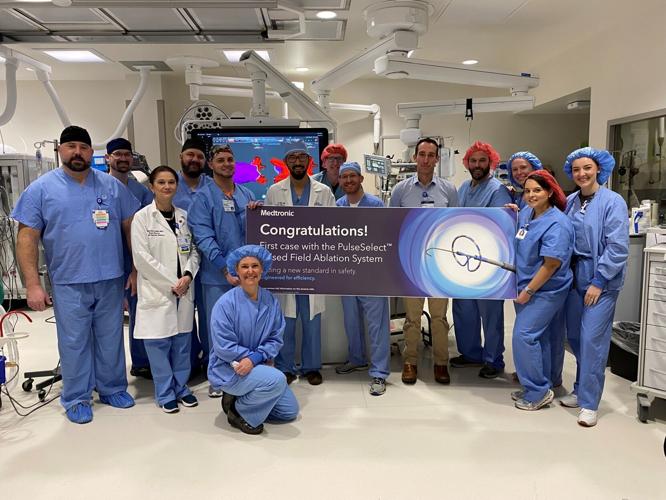
On Feb. 22, 2023, following approval by the FDA, Bon Secours St. Mary’s was the first hospital in the Commonwealth of Virginia and one of the first in the nation to treat patients with AFib using pulsed-field ablation. “It’s exciting to have a new technology that provides us with an additional tool to safely treat our patients,” Dr. Bui said.

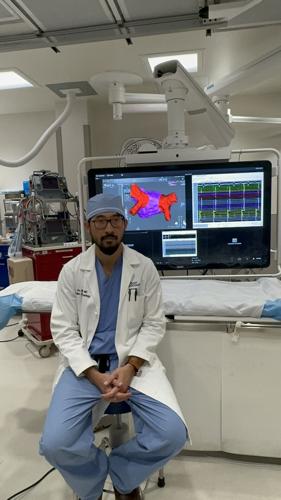
Dr. An Barry Bui, cardiac electrophysiologist at Bon Secours St. Mary’s Hospital
Potentially faster recovery, less discomfort
Dr. Bui pointed out that the standard of care for the management of atrial fibrillation continues to be catheter-based ablation procedures. Thermal ablation technologies such as radiofrequency ablation and cryoablation remain important tools for electrophysiologists. The addition of pulsed-field ablation can potentially shorten the ablation time, reducing anesthesia exposure, which may hasten patients’ recovery time.
“The majority of my patients can be discharged home on the same day and can resume their normal activities in a week,” Dr. Bui said. “We continue to follow our patients closely and the response and results we’ve seen with pulsed-field ablation have been very positive. We are very excited for future advancements in pulsed-field ablation technology as we continue to emphasize safety in the treatment of AFib.”
In fact, Dr. Bui said some patients were so surprised by the minimal discomfort they experienced that they asked him in follow-up visits if any procedure had been performed. “We had to show them an electroanatomic map or image of their heart so they could see what we had done,” he said.
AFib focus for now
Currently, pulsed-field ablation is indicated for the treatment of atrial fibrillation. However, Dr. Bui noted that many other abnormal heart rhythm conditions or arrhythmias still benefit from traditional thermal ablation technology, which remains safe and effective. He foresees additional research and development of newer catheters and technology utilizing pulsed-field ablation for other conditions in the future.
Commitment to excellence
“The exciting thing is that we now have more options to treat our patients,” said Dr. Bui. “Access to the latest innovation in cardiac care allows us to continue to promote safety and medical excellence in the Richmond region and beyond.”
Learn more about AFib
September is AFib Awareness Month. If you or someone you know has AFib, learn more about treatment by visiting bonsecours.com/richmond-afib.