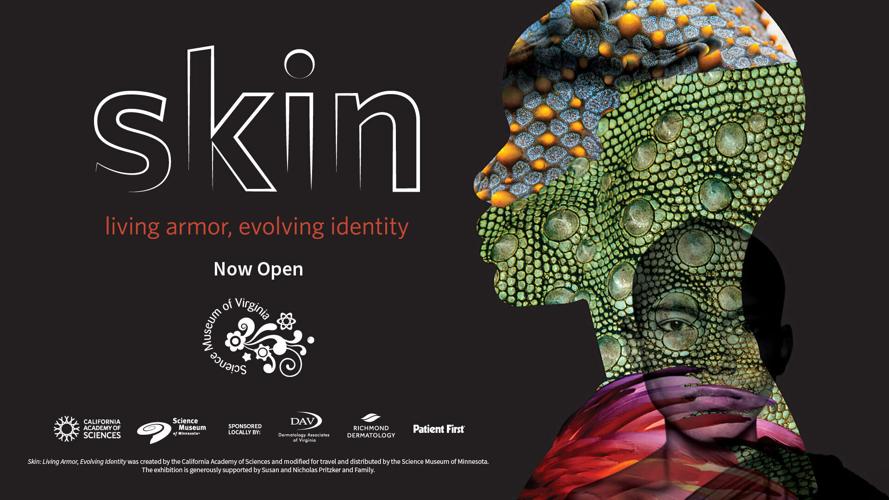


Skin — the human body’s largest and most fascinating organ — plays a vital role in all our lives. Encompassing around 22 square feet of bodily real estate, skin impacts and enhances our day-to-day lives in more ways than meets the eye.
“Skin: Living Armor, Evolving Identity” is a compelling new touring exhibition at the Science Museum of Virginia that showcases how skin can protect, inspire and shape identity. Kids and adults alike can put on their scientific thinking caps and jump into the shape-shifting, color-changing, and thought-provoking world of skin.
Skin Coming to Life: A View into the Skin Exhibition
The best way to learn something new is to feel and see it in real-time. This exhibition features lots of tactile experiences, unique visuals, and immersive multimedia presentations that explore the anatomy of skin. You’ll find that there is almost an endless amount of attention-grabbing, jump-off-the-page facts that will change your perception of this vital organ.
From scales to feathers to fur and more, there are a wide variety of creatures across the animal kingdom with skin that has evolved to suit their specific needs. For example, some animals have armored skin to protect them from predators, while others have camouflage skin that allows them to blend in with their surroundings. From snake scales to otter fur to shark skin, you'll be amazed at the diversity of skin and its complex array of adaptations across the animal kingdom, with some unique properties even inspiring new technologies. By experiencing different types of skin up close, you'll gain a new appreciation for the importance of this beautiful and essential organ.
Alongside dozens of scaley and furry animal specimens, this exhibition also turns the scientific lens on humans. Skin is an essential part of every organism's anatomy, and human skin is no different.
“Humans regenerate their entire skin composition almost every four weeks, meaning just about every month, you have a completely new set of skin. The amount of skin that covers our body is equal to the size of a twin bed. Compare that to elephants with a skin mass equal to 4 ½ king-sized beds,” said Timshel Purdum, Virginia C. Ellett Director of Education.
“Skin is such a remarkable organ that most of us take for granted. One of my favorite facts about skin mentioned in the exhibition is the existence of face mites in the human eyebrow. Almost all humans have them and we don’t even realize it. We are never alone because you always have a friend with you in face mites!” said Purdum.
The Origin of Skin: Reflecting on the Past to Change the Future
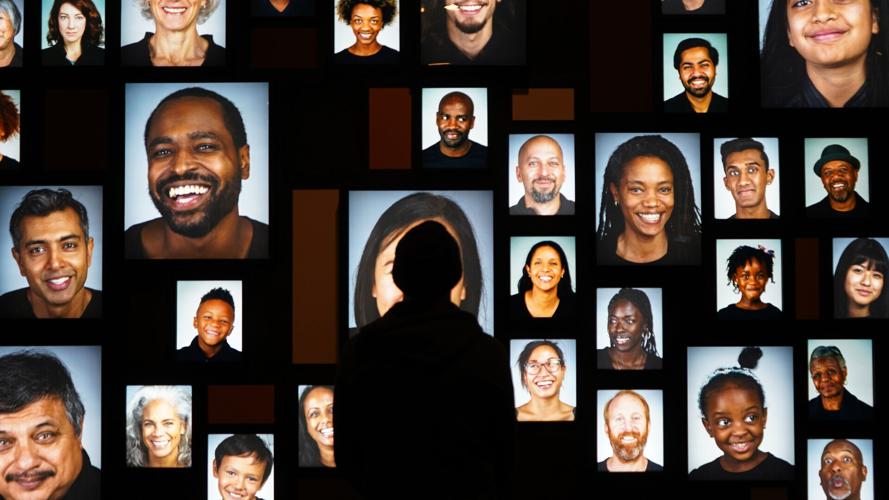
Beyond the science of skin color, the natural, ever-evolving properties of skin have played a key role in shaping and molding how humans developed different cultures and societies. It all starts with where humans came from and where they migrated throughout history.
“All humans originated from Africa and are, therefore, connected in some way. As humans migrated away from Africa and the equator, they were exposed to less ultraviolet light, developing lighter skin tones to absorb and retain more vitamin D,” explained Purdum.
Even though we have developed different skin tones based on where our ancestors migrated to, all humans share the same protective, life-enhancing bonds of skin.

“Skin: Living Armor, Evolving Identity” is the starting point for scientific discovery and conversation. This experience celebrates the diversity of an organ that is so important, powerful, and distinct. The exhibition’s goal is to initiate discussions around how science — and skin — have shaped our world and how we can use this knowledge to create a better future.
Looking to learn more fascinating skin facts? Complementing this exhibition, the Science Museum of Virginia will offer skin-themed demos and educational activities throughout the building and host events and “Lunch Break Science” presentations all year.
This exhibition is included with museum admission, which is $16 for adults, $13.50 for youth and seniors, and $10 for preschool-age children. Children 2 and under are free.
Learn more at smv.org