

In an Instagram reel, Eric Heberling looks straight into the camera, his face expressionless. “Whaddya call it when you hang out in a field late with turkeys?” he deadpans.
Pause.
“Pasture bedtime!”
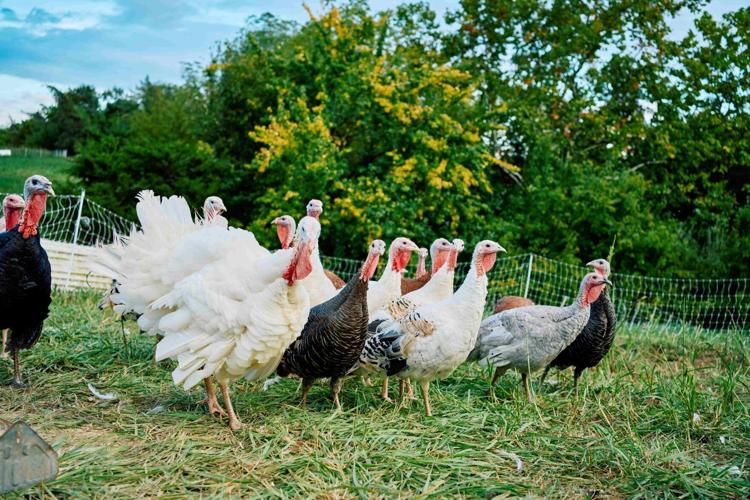
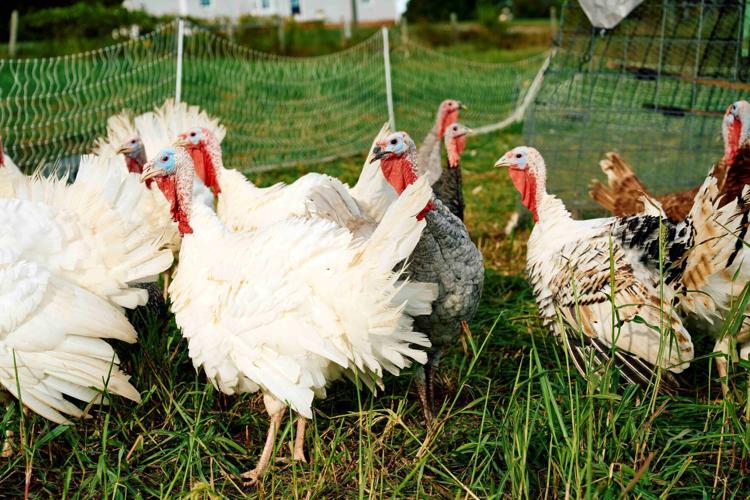
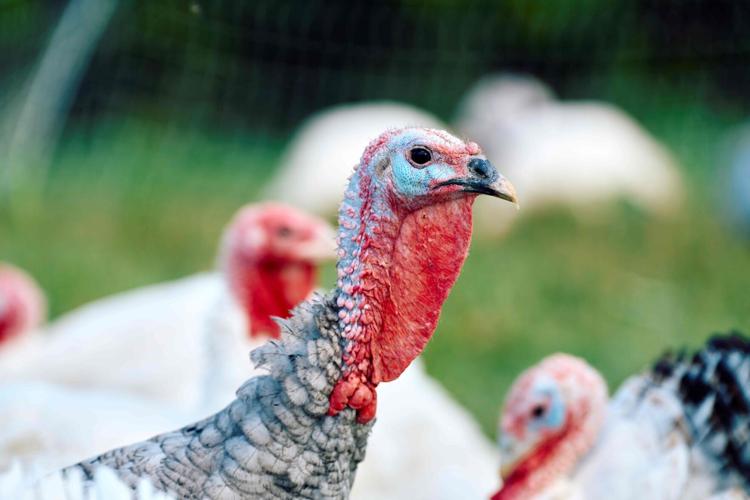
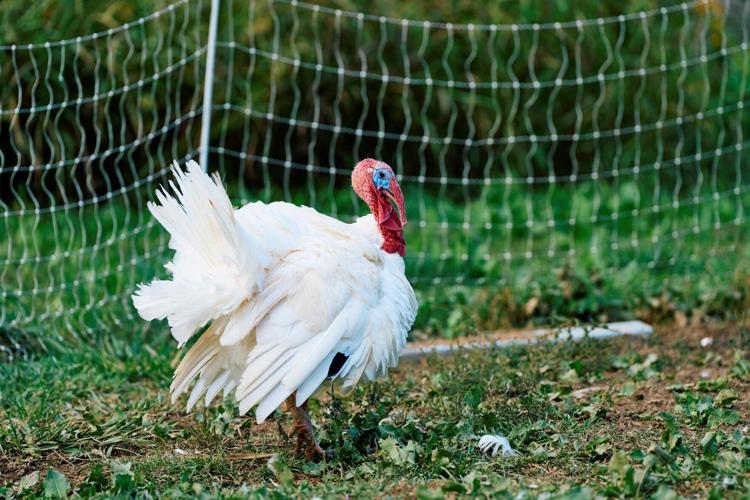
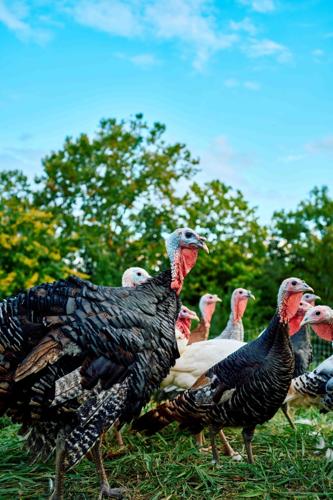
Behind him a group of white and brown turkeys gobble loudly like that worn-out dad joke is the funniest thing they’ve ever heard. It’s a rare farmer who can make a turkey laugh, but Heberling has the touch. He began raising turkeys five years ago on Heb Farm, his family’s 25-acre homestead situated in Augusta County between Staunton and Harrisonburg. Since then, he has built a thriving social media presence while working to revive old turkey breeds so rare these days that few people have ever heard of them.
People are also reading…
For now, his turkey flock is more about passion than profit. “On paper, the heritage turkey is the dumbest thing you can raise for meat,” he says. That’s because heritage turkeys take about eight months to mature — twice as long as the birds found in commercial poultry houses just a few miles away. That makes them twice as expensive as well.
But the 40-year-old, bearded and bespectacled former science teacher, who now works for the Headwaters Soil and Water Conservation District, has a larger mission in mind. “These animals are in such low numbers now, it wouldn’t take much for them to go extinct,” he says.
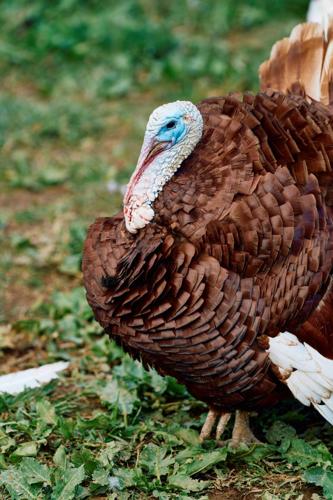
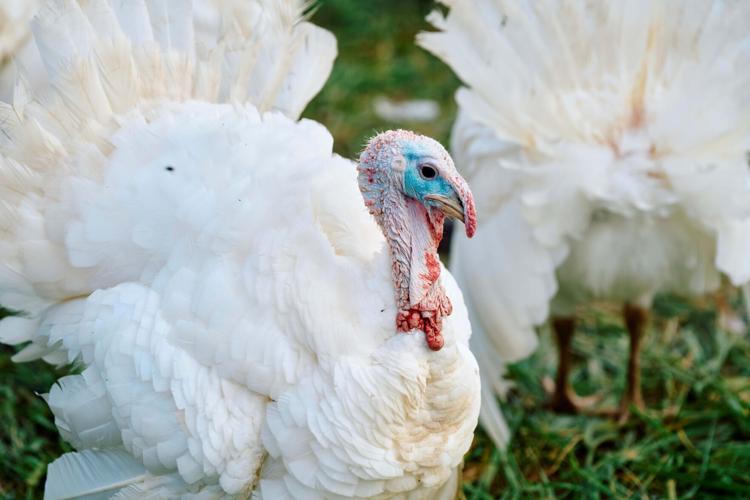
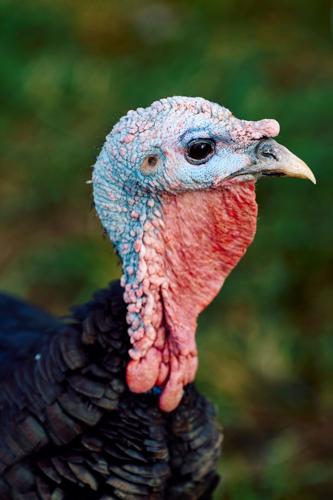
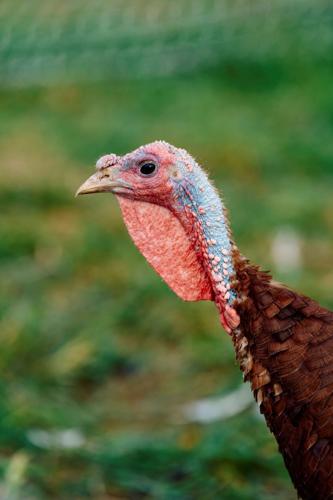
Like other heritage livestock, his Bourbon red, Holland white, blue slate, and standard bronze turkeys represent a direct connection to the past — both the distant and not so distant. “Maybe my grandparents would have had these birds for Thanksgiving,” Heberling says. “My great-grandparents definitely would have had these for Thanksgiving.”

Our relationship with turkeys has deep roots. Native Americans bred and raised turkeys for their feathers, not their meat. Benjamin Franklin famously suggested making the wild turkey, not the eagle, the national symbol of the young United States. European colonists carried turkeys back to England and France, domesticated them, and brought them back to the colonies as livestock. For centuries afterward, heritage turkeys like the ones on Heberling’s farm were the norm for holiday eating.
Things changed after World War II, when the poultry industry pressured farmers to create meaty birds that grew rapidly and cheaply. The so-called “Chicken of Tomorrow” project soon begat the turkey of tomorrow whose broad-breasted descendants fill hundreds of those low-slung poultry houses, which dot the landscape up and down the Shenandoah Valley.
Consider this: Each year, U.S. commercial poultry producers grow more than 200 million turkeys, every one of them engineered to meet consumers’ preference for white meat over dark, and the more of it the better. Those top-heavy turkeys end up in grocery freezers all over the country, vacuum-packed in white plastic with little pop-up timers embedded in the meat.
Breeders like Heberling raise between 15,000 and 25,000 heritage turkeys each year. Compared to the immense market for commercial turkeys, that’s roughly equal to a few teaspoons of water in five gallons — just a drop in the bucket.
While commercial turkeys grow quickly and cheaply, they come with some downsides. The biggest one is that, like a field of corn, they’re a genetic monoculture, putting them at risk of diseases like avian flu that can wipe out whole flocks of birds in a single pass. “In one generation, you could lose an entire breed of turkey,” says Jeannette Beranger, senior program manager for The Livestock Conservancy, a North Carolina-based nonprofit dedicated to preserving heritage breeds of all kinds.

Heritage turkeys, it turns out, have a lot more in common with their wild cousins. For one thing, they can reproduce all on their own, which is something the commercial breeds can’t do anymore. They also have significantly stronger immune systems than commercial birds, making them more resistant to diseases that threaten commercial operations. While barn-raised commercial turkeys are feed-eating machines, Heberling’s birds spend their days outside where they forage for grass and bugs with manmade feed as a supplement.
That guarantees that Heberling’s turkeys ending up as the centerpiece on a holiday table are leaner and more nutritious than their commercial counterparts. He typically harvests 30 to 50 birds annually, depending on his breeding success that year, and sells them all based purely on word-of-mouth. That’s not too shabby, considering that they can be about half the size and twice the price of a supermarket bird, which Beranger dismisses as “mostly water.”
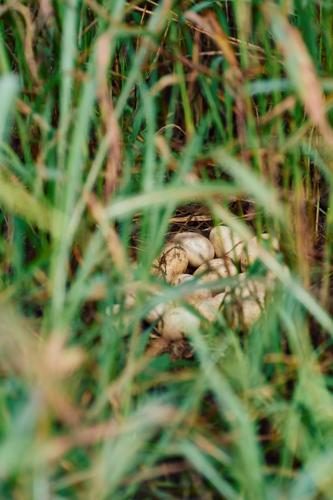
While Heberling sells his turkeys for Thanksgiving dinner (place your order in April), he’s more interested in building up the breed. In his garage, a refrigerator-sized incubator is filled with turkey eggs. This year, he’ll raise about 150 chicks, some of which he’ll sell to other homesteaders and some that he’ll keep to grow his own flock. “You have a relationship with these animals from the moment they hatch,” he says. “I want these animals to have the best life they can and end it with just one bad day” — which brings us back to Heberling’s Instagram.
“I started the Instagram page when I started the farm,” Heberling says. “I had a couple hundred followers, and I posted to show what was going on on the farm.” He began taking his viewers along as he moved his hundreds of chickens to fresh pasture or showed his farm dog drinking from the faucet.
One day, he realized he could make his turkeys gobble if he pitched his voice just right. In that moment, an internet comedy act was born. His first viral video took off in October of 2023 and got 11 million views.
When hugely popular podcaster Joe Rogan discovered Heberling’s videos last year year, the audience for @hebfarmhomestead jumped to 46,000 practically overnight. He’s now shooting past 90K. His growing audience has garnered endorsement offers for farm boots, egg-laying boxes, and other gear.
It can be a lot to handle for a part-time farmer and full-time introvert who tells jokes to turkeys for fun. “I’m trying to figure this out,” Heberling says. “But in a world that is bonkers crazy right now, if I can make somebody’s day, I’m happy.”