

Plant breeding is a lesson in alchemic genius. What genetic recipe was necessary — how much intentional, how much wondrous coincidence — to arrive at that perfect endpoint?
Paging through the seed catalog (ink and paper, as I’m an avowed Luddite) is a seasonal ritual. I’m always curious about new offerings, from the practical to whimsical. After much deliberation, it’s finally time to place an order. Then, like some divine gift, seeds arrive in unassuming packages, filled with horticultural promise.
One novel option caught my eye this cycle: hyloom tomatoes (more on that in a second).
We’re all familiar with heirlooms. They’re classic standbys: generational hand-me-downs with historical and cultural appeal. These are defined by their intense, unparalleled flavor and often vivid coloration. They model peak food sovereignty; open pollinated and true to type. One can collect and plant the next generation — rest assured they’ll be carbon copies of their parents. Seed savers and swappers rejoice!
People are also reading…
But their kryptonite is glaring: These are not bred for long haul shipping. They bruise (borderline liquify) at the slightest nudge; endurance isn’t their forte. They’re literally and figuratively thin skinned. Yields are substandard at best. They’re also pushovers to pests and disease, raising the white flag at the first sign of aggression. And frankly, they don’t have runway model aesthetics. You could say they’re downright ugly and ill-proportioned — though that’s arguably part of their charm.
Clearly, a value judgement was made in their creation and continued curation; taste must prevail.
Hybrids (F1 in the variety name is a dead giveaway) were devised with an opposing mentality: Flip all the heirloom attributes 180 degrees. They’re marketed as greater than the sum of their parts. Breeders make multiple, deliberate crosses with certain goals in mind: transport, uniformity, prolific yield, and robust pest and disease resistance. Hybrids are the garden’s superstars — vigorous, productive, and bred to impress — but they often lack soul.
The goal isn’t to preserve a lineage but to test as many parental combinations as possible, selecting the traits breeders value most. What counts as “best,” of course, is subjective. In the process, something is lost in translation, namely taste.
And if you’re a seed saver, don’t expect predictable results. Hybrid varieties don’t grow true to type, meaning the next generation may look and perform quite differently from the original. Instead of reproducing the same prized traits, those seeds can revert to characteristics from earlier generations.
Now enter hylooms, a fusion of hybrid and heirloom varieties. This is an earnest attempt at compromise, to bundle all desirable attributes in one tidy package. The hyloom movement aims to preserve heirloom eating quality while addressing production challenges often associated with traditional heirlooms. Beauty sans defects. In essence, a reboot and rebrand. Flavor and looks rolled into one? Sign me up!
Not so fast; this comes with trade-offs. Interested in growing that hyloom variety again? These are technically F1 hybrids, so scratch seed saving. You must go to the seed supplier every year to get a fresh batch. They’re also pricey. In this regard, they fall prey to the corporate trap like their hybrid kin.
Otherwise, think of hylooms as an intermediate state between heirlooms and traditional hybrids. They’re basically F1s with a facelift bred to resemble heirlooms — enhanced taste, moderate-to-high yields, pest/disease resistance, good uniformity, moderate resistance to cracking and catfacing (a disorder that causes misshapen fruit), and decent shelf life — hallmarks that suit them for specialty and retail markets.
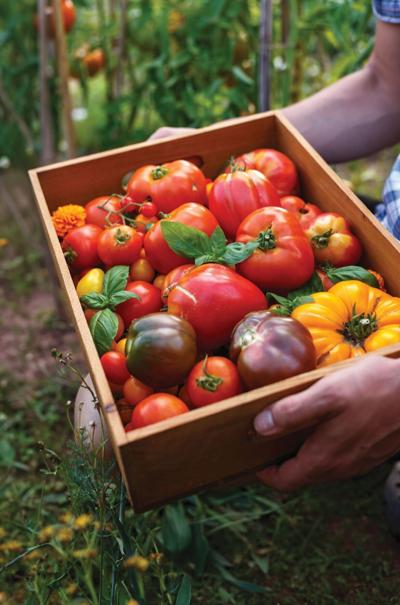
And just like heirlooms, they model a certain rustic, artisan, and premium look. Beyond that, there is no standard template. They come in all shapes (globe, flattened, ribbed, and smooth), and sizes, with eclectic coloration (external and internal, sometimes marbled) among subtypes like beefsteaks (including French Heritage or Marmande), bicolor, and striped.
Is the hyloom brand merely corporate greenwashing in disguise? Is it enough to sway a skeptical public? Sink or swim, I encourage you to be the judge in your gardening pursuits. Perhaps do some backyard breeding alchemy of your own — whatever aligns with your value system.