


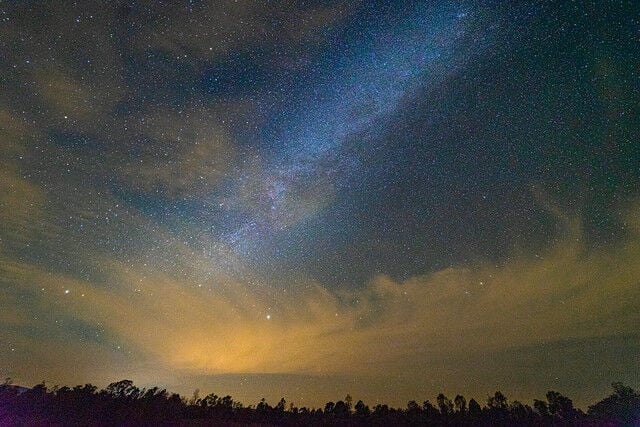
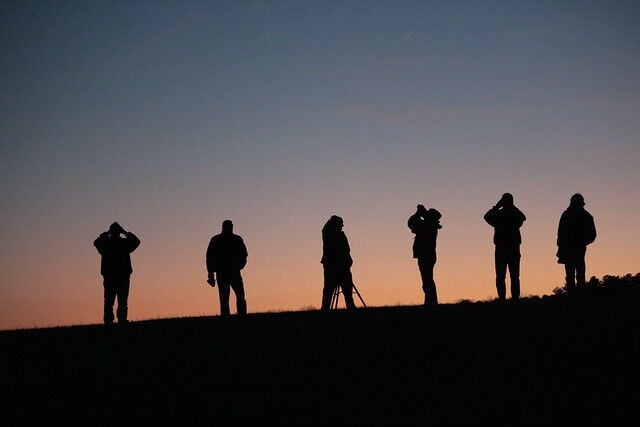
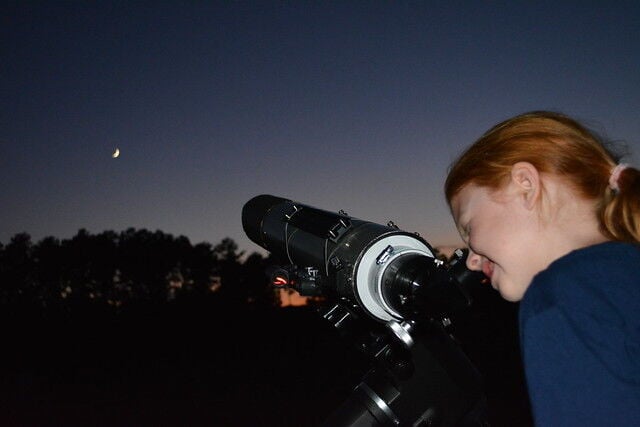
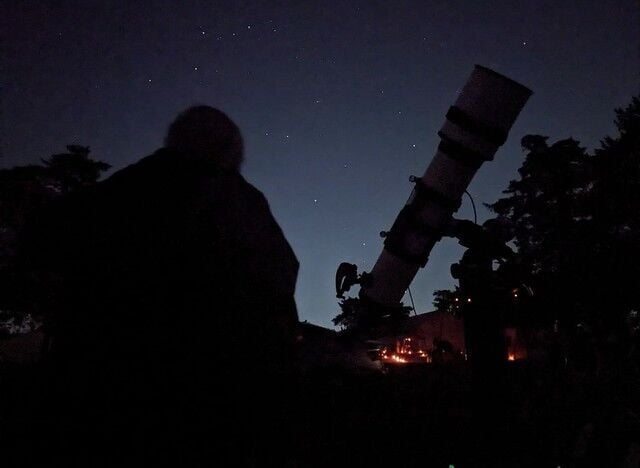
When you think of fall, colorful leaves, cooler air and pumpkins probably come to mind. But there’s another seasonal perk that often gets overlooked: stargazing.
Autumn nights are longer, with lower humidity and temperatures, making them perfect for spotting constellations, planets and meteors, and there’s no better spot to watch the night sky than Virginia State Parks.
Why Virginia State Parks are ideal for fall stargazing
The Virginia State Parks system is home to four International Dark Sky Parks: Staunton River, James River, Natural Bridge and Sky Meadows state parks.
People are also reading…
These parks work hard to protect their natural darkness and offer special stargazing programs for visitors that highlight the significance of minimizing light pollution and feature guided night-sky watching.
Outside of the system’s Dark Sky Parks, many other Virginia State Parks sit far from city light pollution and host ranger-led stargazing programs.
Campgrounds, lakeshores and ridge overlooks create areas where visitors can enjoy unobstructed views of the stars.
Please note: Many of our parks close at dusk, so unless you're staying overnight, you’ll need to attend a ranger-led program or a special event to explore after dark.
What you might see this fall in Virginia
According to Constellation Guide, several constellations are visible during fall months, including:
- Pegasus: Look for the Great Square of Pegasus. This bright, simple shape is a good reference point for finding other constellations.
- Andromeda: Connected to Pegasus, Andromeda contains the Andromeda Galaxy, the closest large spiral galaxy to our own. On very dark nights, you may see it as a faint smudge without a telescope.
- Cassiopeia: Shaped like a large “W,” Cassiopeia sits opposite the Big Dipper across Polaris. It’s one of the easiest fall constellations to identify.
- Perseus: Found near Cassiopeia and Andromeda, Perseus spans a large portion of the sky and includes the radiant point of the famous Perseids (though the meteor shower occurs earlier in the year).
- Aquarius: Prominent in early fall, Aquarius is more subtle, but its distinctive zig-zag lines are visible in darker skies.
- Pisces: Another fall constellation located near Pegasus. Though faint, it’s often visible during clear October nights.
- Cetus: This “sea monster” constellation is large and sits low in the southern sky during fall, ideal for late-night skywatchers.
In addition to constellations, here are some meteor showers you can enjoy this fall:
- Taurids Meteor Shower: Runs from Sept. 2 to Dec. 10 and peaks on the night of Nov. 4.
- The best viewing will be just after midnight from a dark location. The meteors will radiate from the constellation Taurus but can appear anywhere in the sky. The Taurids is a long-running minor meteor shower producing only about 5 to 10 meteors per hour. It’s unusual because it consists of two separate streams. The first is produced by dust grains left behind by Asteroid 2004TG10. The second stream is produced by debris left behind by Comet 2P Encke.
- Orionids Meteor Shower: Runs from Oct. 2 to Nov. 7 and peaks on the night of Oct. 21 and the morning of Oct. 22.
- The best viewing will be from a dark location after midnight. Meteors will radiate from the constellation Orion but can appear anywhere in the sky. This is an average meteor shower that produces up to 20 meteors per hour at its peak. It is produced by dust grains left behind by comet Halley, which has been observed since ancient times.
- Draconids Meteor Shower: Runs from Oct. 6 to Oct. 10 and peaks the night of Oct. 7.
- The Draconids is an unusual shower because the best viewing is in the early evening instead of the early morning. Meteors will radiate from the constellation Draco but can appear anywhere in the sky. This is a minor meteor shower that produces only about 10 meteors per hour. It is produced by dust grains left behind by comet 21P Giacobini-Zinner, which was first discovered in 1900.
- Leonids Meteor Shower: Runs annually from Nov. 6 to Nov. 30 and peaks on the night of Nov. 17 and the morning of Nov. 18.
- The best viewing will be from a dark location after midnight. Meteors will radiate from the constellation Leo but can appear anywhere in the sky. This is an average meteor shower producing up to 15 meteors per hour at its peak. It is unique in that it has a cyclonic peak about every 33 years where hundreds of meteors per hour can be seen. That last occurred in 2001. It is produced by dust grains left behind by comet Tempel-Tuttle, which was discovered in 1865.
- Geminids Meteor Shower: Runs annually from Dec. 7 to Dec. 17 and peaks on the night of Dec. 13 and the morning of Dec. 14.
- The best viewing will be from a dark location after midnight. Meteors will radiate from the constellation Gemini but can appear anywhere in the sky. This shower is considered by many to be the best of the year, producing up to 120 multicolored meteors per hour at its peak. It is produced by debris left behind by an asteroid known as 3200 Phaethon, which was discovered in 1982.
Best practices for stargazing
For the best stargazing experience, bring a blanket or camping chair and dress in warm layers. A red-light flashlight will help you navigate without losing your night vision, and a stargazing app can make it easier to identify constellations as they appear. Once you settle in, give your eyes 20 to 30 minutes to adjust to the darkness so you can fully appreciate the night sky.
When it comes to stargazing at Virginia State Parks, attending a guided program is highly recommended. From star parties to moonrise hikes, parks across the state offer a variety of opportunities to enjoy the night sky with a ranger or astronomer by your side.
Learn more and find an event near you at https://www.dcr.virginia.gov/state-parks/dark-sky-parks.
While many Virginia State Parks close to the public at dusk (unless you’re attending a program or staying overnight), our Dark Sky Parks allow visitors to come after hours for self-guided stargazing.
- Sky Meadows: The park has designated Turner Pond as its official Dark Sky Observation Area. Here, astronomers and stargazers may practice astronomy after ordinary park hours; however, the following guidelines apply:
- Visitors may access the area any time of the day and after dusk. However, they must vacate the area by 2 a.m.
- Turner Pond is not available for overnight camping. Overnight camping must be done in accordance with our regular camping rules.
- Visitors must pay the regular $10 parking fee and display the yellow hang tag.
- Visitors must park in designated parking areas and walk to the Viewing Field.
- Staunton River: Stargazers are invited to the Dark Sky Observation Field by the visitor center for after-hours stargazing during meteor showers and other astronomical phenomena. To learn more, please go to www.virginiastateparks.gov/stauntonriver-events or call the park at 434-572-4623.
- James River and Natural Bridge: With permission, these parks allow astronomers to enjoy the night sky on their own after the parks close. To request after-hours access at James River, please call 434-933-4355. To request after-hours access at Natural Bridge, please call 540-254-0795.


