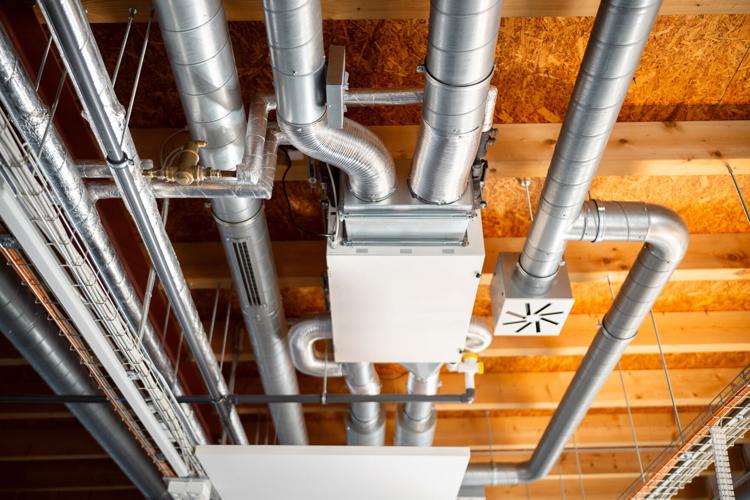


This image showcases a view of industrial pipes and ducts installed on a ceiling. It highlights the complexity of the ventilation and plumbing systems in a commercial space, making it suitable for discussions on building infrastructure and maintenance.
If you make a purchase after clicking on links within this article, Lee Enterprises may earn affiliate commissions. The news and editorial departments had no role in the creation or display of this content. All opinions and views are of the advertiser.

Heating, cooling, and plumbing — from a team that's been doing this in the region for over 40 years.
- Available 7 days a week: HVAC Emergencies Don't Keep Business Hours
- Guaranteed in writing: Written estimate you approve before any work starts
Free estimates · Licensed & insured · Serving greater Omaha and surrounding areas
Go ahead and think about your basement for a second. When was the last time you were actually down there? For some homeowners, the answer may be "when the heat stopped working" or "when I noticed that smell."
That smell, by the way, is worth paying attention to.
Basements are where Midwest homes may show signs of gradual wear and tear. The HVAC equipment lives down there in most older houses, and it absorbs everything the basement throws at it. Moisture. Temperature swings. The occasional flood. Most of it goes unnoticed until something breaks, and by then it's usually been building for a while.
The moisture problem, and why it matters more than people think
Summers here are humid in a way that's genuinely hard on below-grade spaces. Heat pushes moisture through foundation walls, spring thaw adds to it, and a basement that feels merely "a little damp" can be doing real damage to the mechanical equipment sitting in it. Aksarben ARS handles HVAC repair and service throughout the region and basement moisture damage is one of the most common things their technicians find when they show up for what a homeowner thought was just routine service.
Basement HVAC moisture issues tend to look like rust on the unit's exterior, ductwork that's started to deteriorate from the inside, mold getting established in places you can't see. When the system runs, it pulls air through all of that and distributes it through the house. So that smell isn't just in the basement anymore.

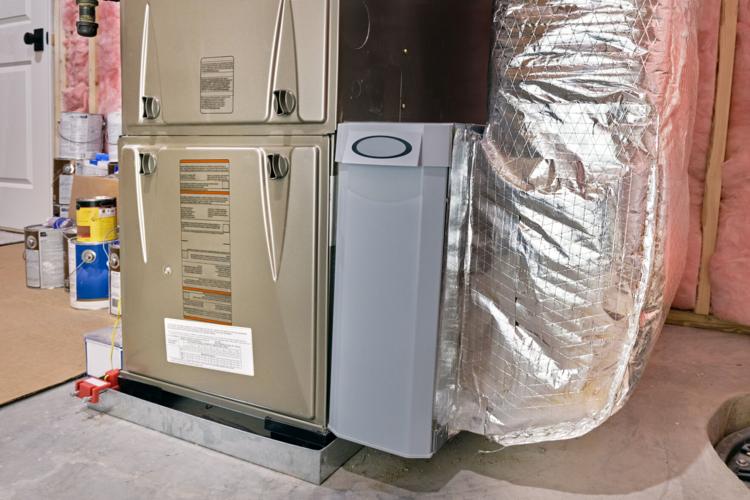
Air filter container between high efficiency furnace and ductwork in a basement utility room
The signs that are easy to explain away
Reduced airflow in one or two rooms. A furnace that starts and stops more than it used to. Heating bills that have gone up a little every winter for no clear reason. Individually, these feel like minor annoyances. Together they're usually telling you something about what's happening below grade.
Basement HVAC issues have a way of getting lived with for years because no single symptom feels urgent enough to call someone about. Then February happens and the basement HVAC broke and suddenly it's urgent.
If it's the furnace, don't wait on it
A damp basement environment ages a furnace fast. Corroded burners, ignition problems that come and go, a heat exchanger that's been compromised without any obvious outward sign. That last one matters because a cracked heat exchanger isn't just a performance issue. It's a potential carbon monoxide situation. If your furnace is doing anything that feels off, strange smells, inconsistent heat, noises it didn't used to make, furnace repair and maintenance is worth scheduling before you're in emergency territory. Aksarben ARS works on all makes and models and will tell you straight whether you need a repair or whether the unit has reached the end of its useful life.
The plumbing piece most people don't connect
Chronic basement moisture often has a plumbing component that doesn't get looked at. A pipe that's been weeping slowly for a season. Condensate from the AC system that isn't draining properly. A water heater with a slow leak at the base. Any of these quietly feed the damp environment that degrades HVAC equipment over time. Getting plumbing repair assessed at the same time as HVAC work isn't overkill. It may be what actually fixes the underlying problem rather than the same technician coming back in two years for round two.
Basements in this part of the country are mostly the same story, just different houses. Moisture, aging equipment, problems that developed slowly and got noticed late. None of it is unusual and none of it is unfixable. It just needs someone who's seen it enough times to know where to look.