
I remember exactly where I was the day I learned about Richmond’s winding, turbulent, agonizing, painstakingly long road toward a new minor league baseball stadium.

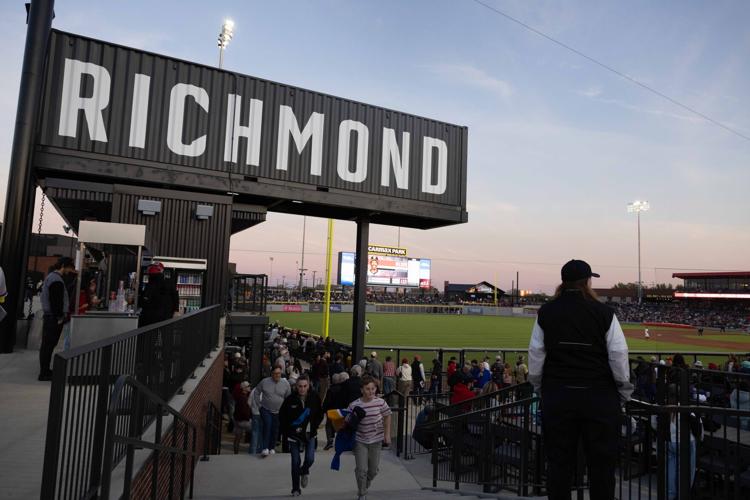
CarMax Park is shown on opening night during a game between the Altoona Curve and the Richmond Flying Squirrels. The first game at the new ballpark, which cost around $140 million to build, was a sellout, but tickets remain for opening-week games Wednesday through Sunday.
People are also reading…

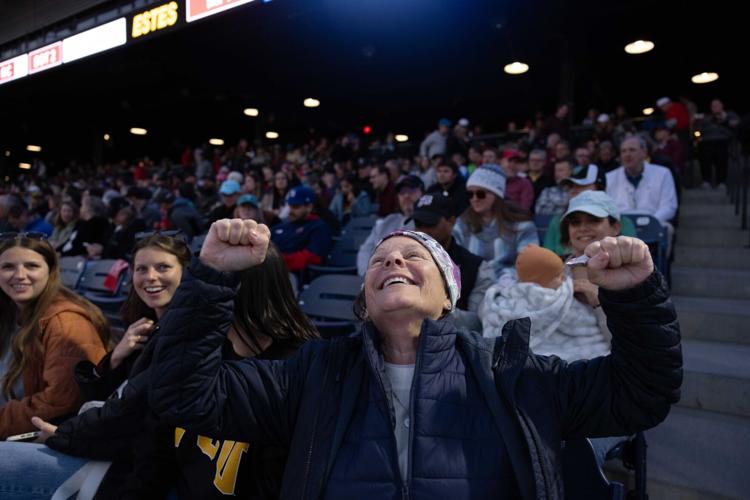
Megan Nixon reacts to a play at CarMax Park in Richmond, VA, Tuesday, April 7, 2026. This is first game ever to be played at CarMax Park.
Fans wait in line for refreshments during the Richmond Flying Squirrels home opener at CarMax Park

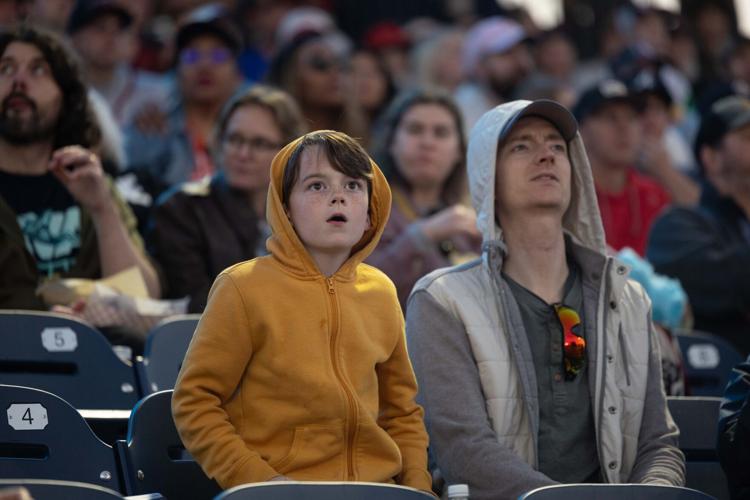
Levi Swaim and his father Brandon watch a play at CarMax Park in Richmond, VA, Tuesday, April 7, 2026. This is first game ever to be played at CarMax Park.
Timeline: The long road from The Diamond to CarMax Park
1985
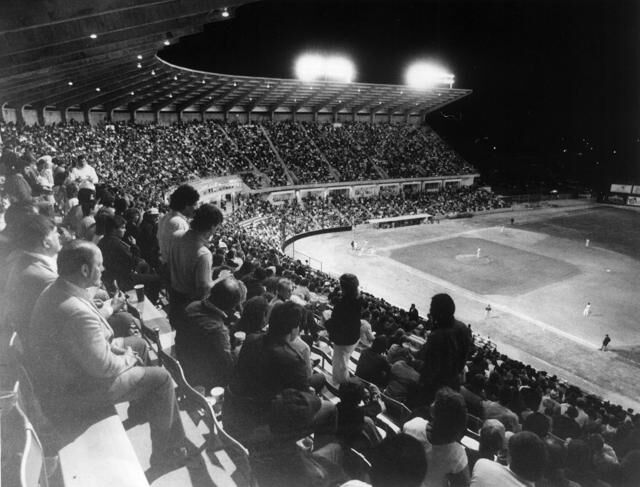
The Diamond opened and was home to the Richmond Braves, Atlanta's Triple-A club, in town since 1966. The Richmond Metropolitan Authority owned and operated the stadium on behalf of the city and the counties of Henrico and Chesterfield. Those jurisdictions paid for half of the construction cost, and private funds covered the other $4 million.
The Diamond in its first season drew 368,565, a franchise record and third nationally among minor league teams. Ten times in The Diamond's first season, 10,000 fans or more came to the ballpark. Good attendance continued for several years.
In this file photo, a crowd of 12,435 watch the Richmond Braves host the
Syracuse Chiefs in the first game played at The Diamond, April 17, 1985.
2000
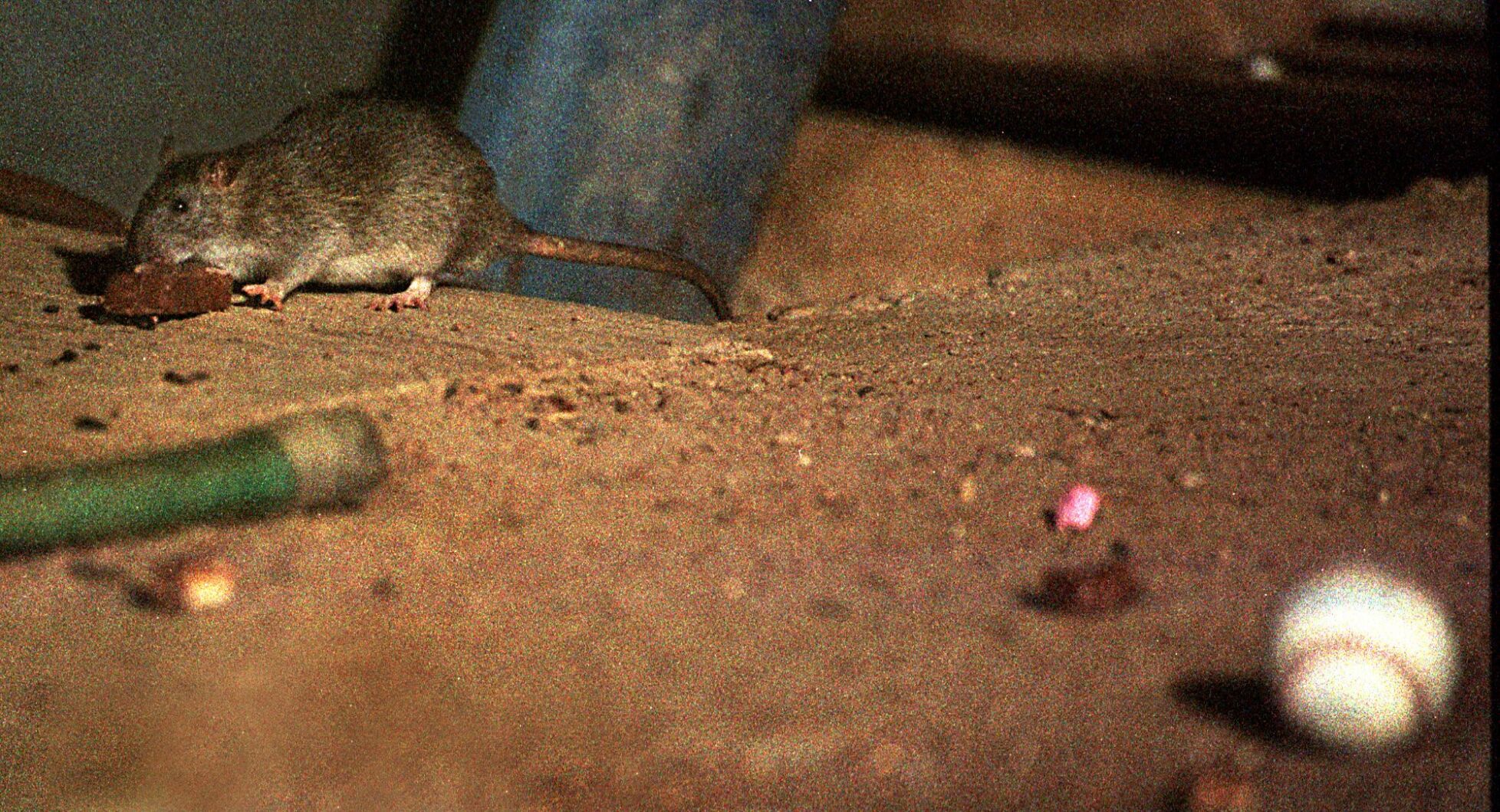
Exterminators were hired to address The Diamond's problem with rats. Some visited the visitors' dugout and bullpen area during games.
2000
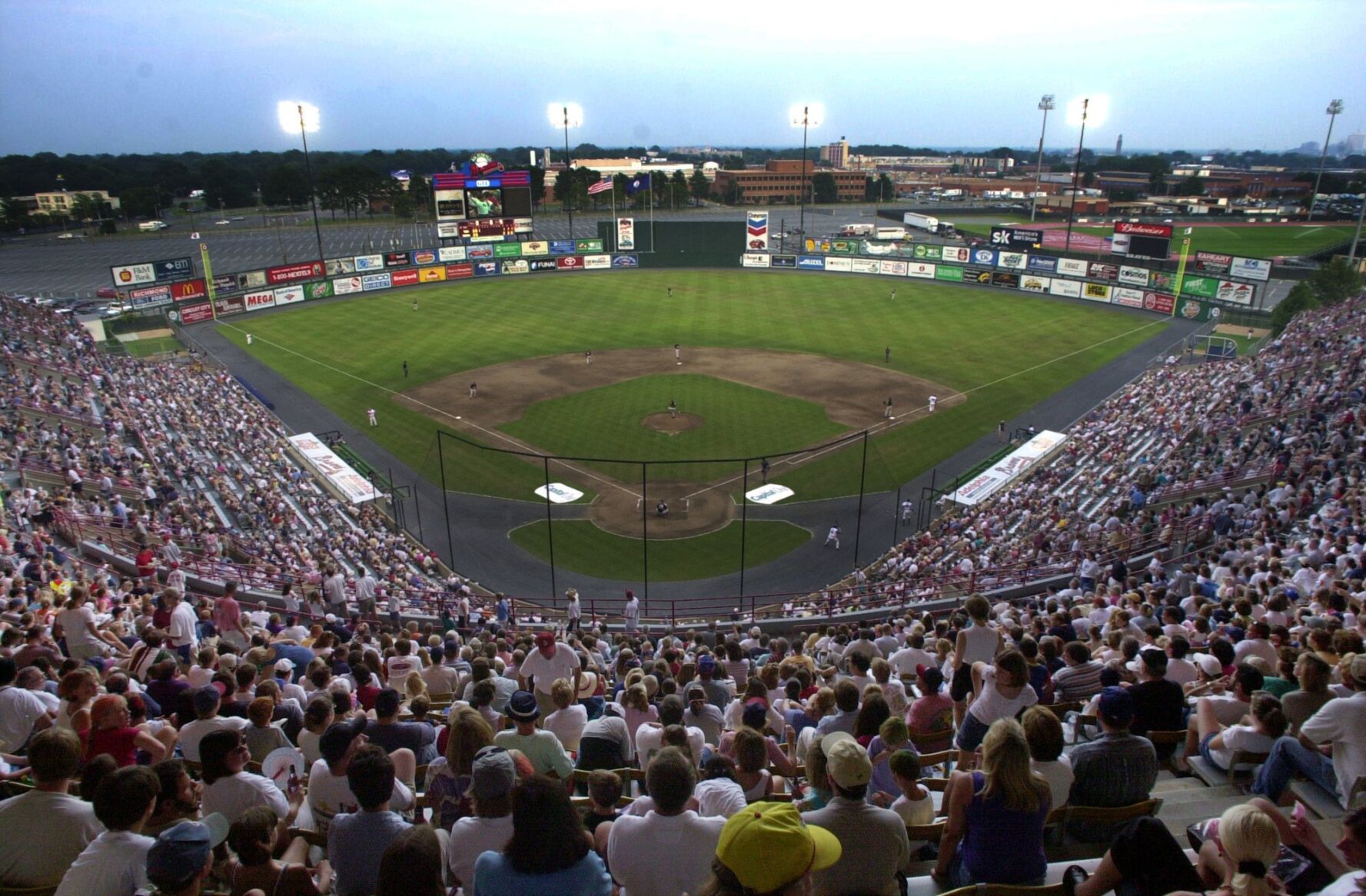
The Braves, who own their Triple-A franchise, began expressing that The Diamond needed improvements. They focused on expanded clubhouses, and the additions of batting cages and a fitness area for the benefit of their developing players.
In this file photo, the Richmond Braves play the Norfolk Tides at The Diamond on July 3, 2000.
2003
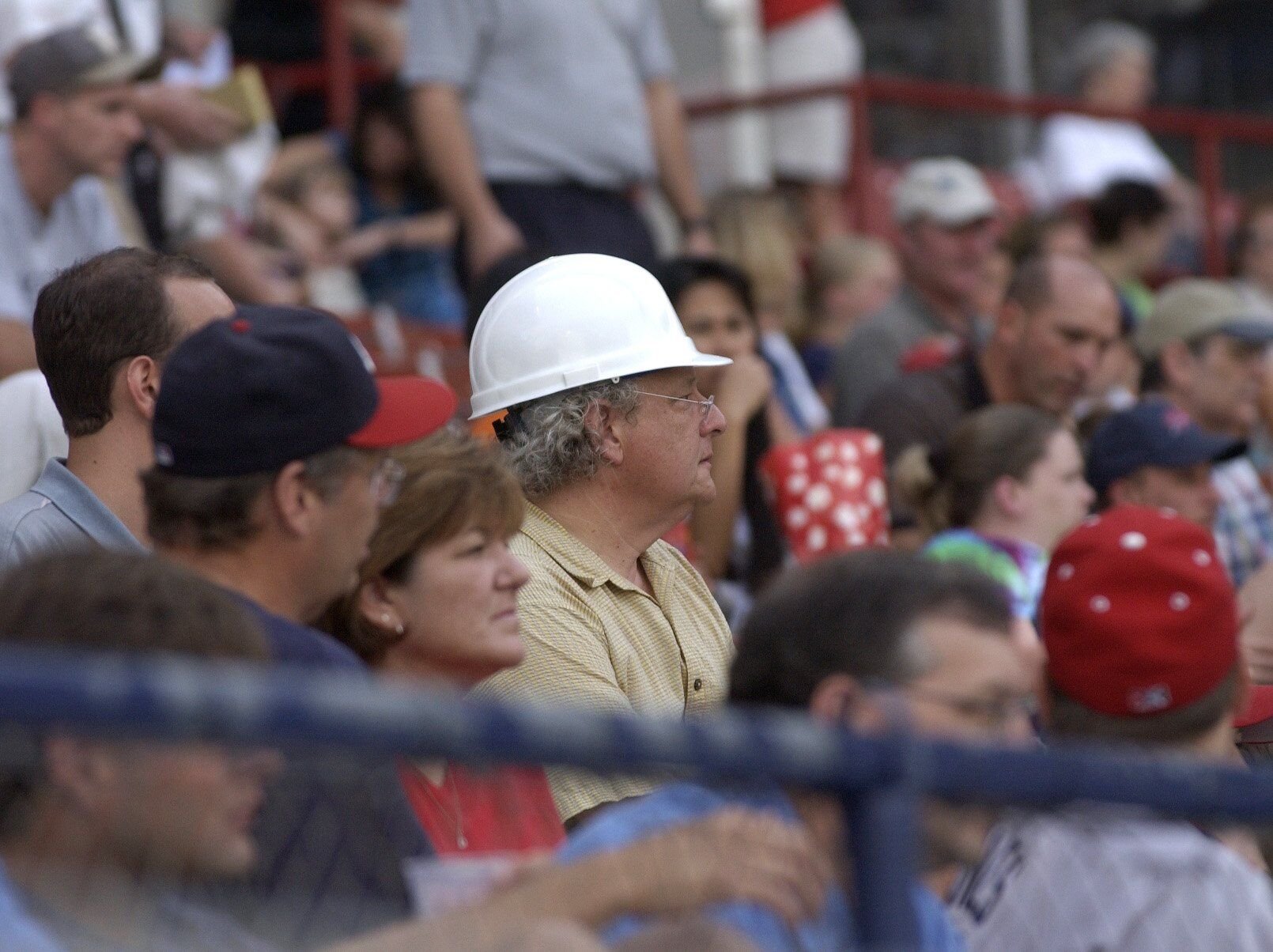
A football-sized piece on concrete fell from The Diamond's roof into stands during a Sunday game. No one was hurt.
In this photo from the Times-Dispatch archives, Richmond Braves fan Lee Brauer wears a hard hat as he watches the Braves take on the Norfolk Tides at The Diamond on August 4, 2003, the day after a chunk of concrete fell from a roof support.
2003
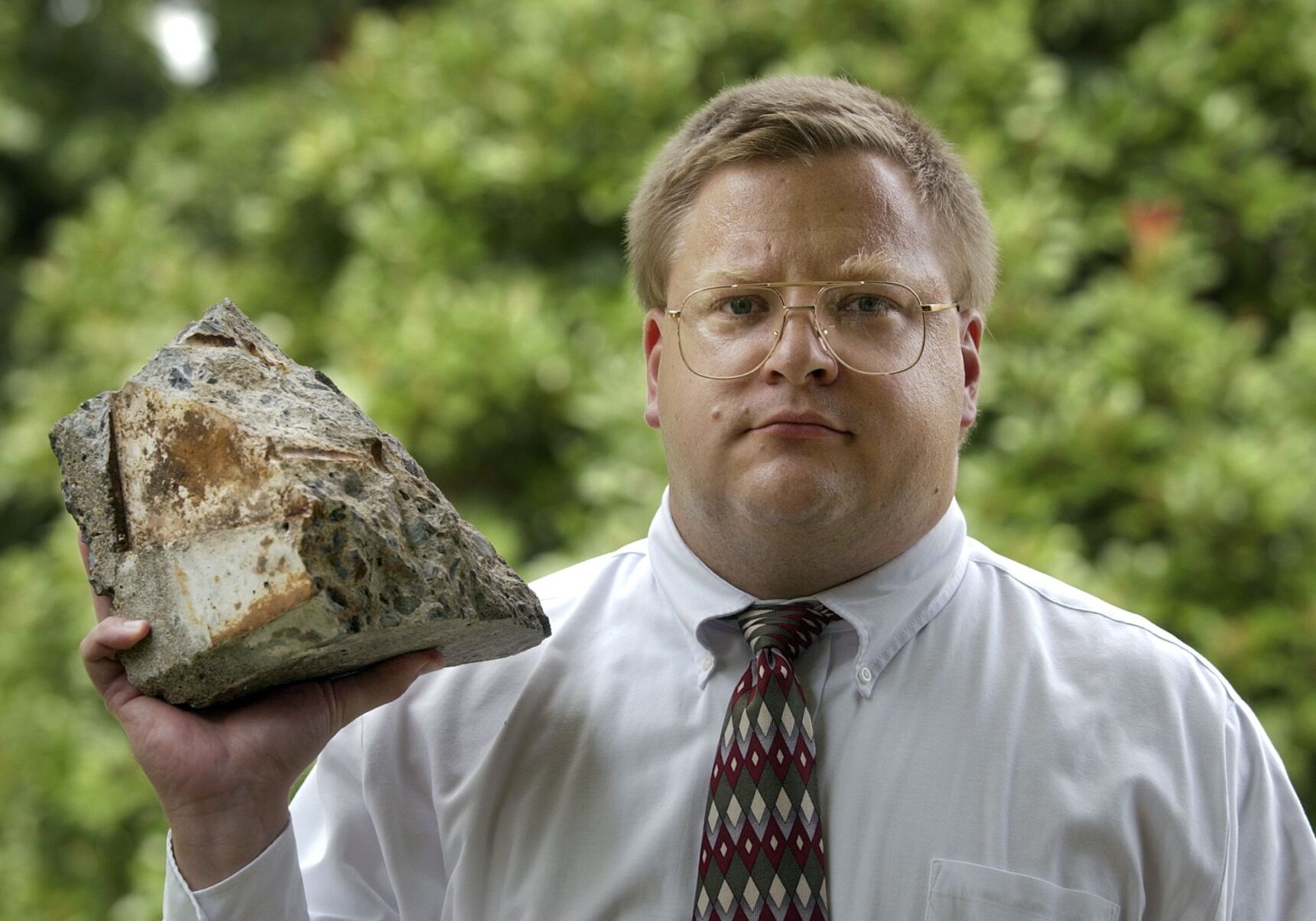
Richmond and Henrico and Chesterfield counties supported an $18.5 million renovation of The Diamond. It was to include addition of lower-level seating and reduction of upper deck, an outfield berm, installation of box seats, construction of an open-air concourse, renovation of clubhouses and public restrooms, and addition of concession areas. Construction was scheduled to start in September of 2004.
In this file photo, Meade Daffron, who worked with the Richmond Metropolitan Authority, in August of 2003 holds the chunk of concrete that fell from a roof support at The Diamond and fell 75 feet into the stands during a Sunday afternoon game.
2004
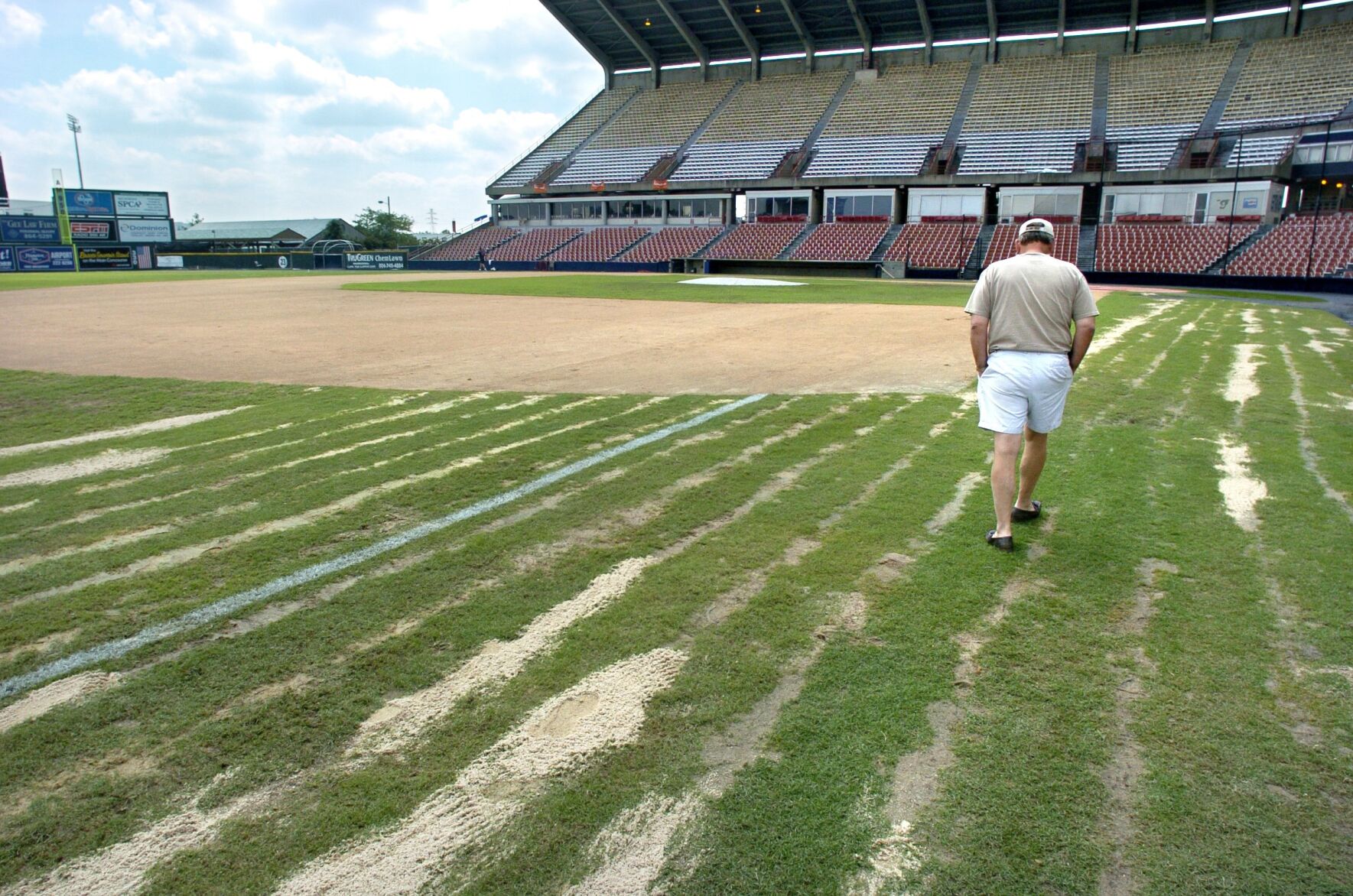
Renovation of The Diamond was postponed, as City Manager Calvin Jamison advocated for a $58 million ballpark project in Shockoe Bottom. Behind the project, which would have included related development, is the Richmond Ballpark Initiative. That plan faded, primarily because of financing concerns.
In this photo from the RTD archives, Richmond Braves General Manager Bruce Baldwin in 2004 walks over some of the turf under repair at The Diamond after heavy rain.
2004
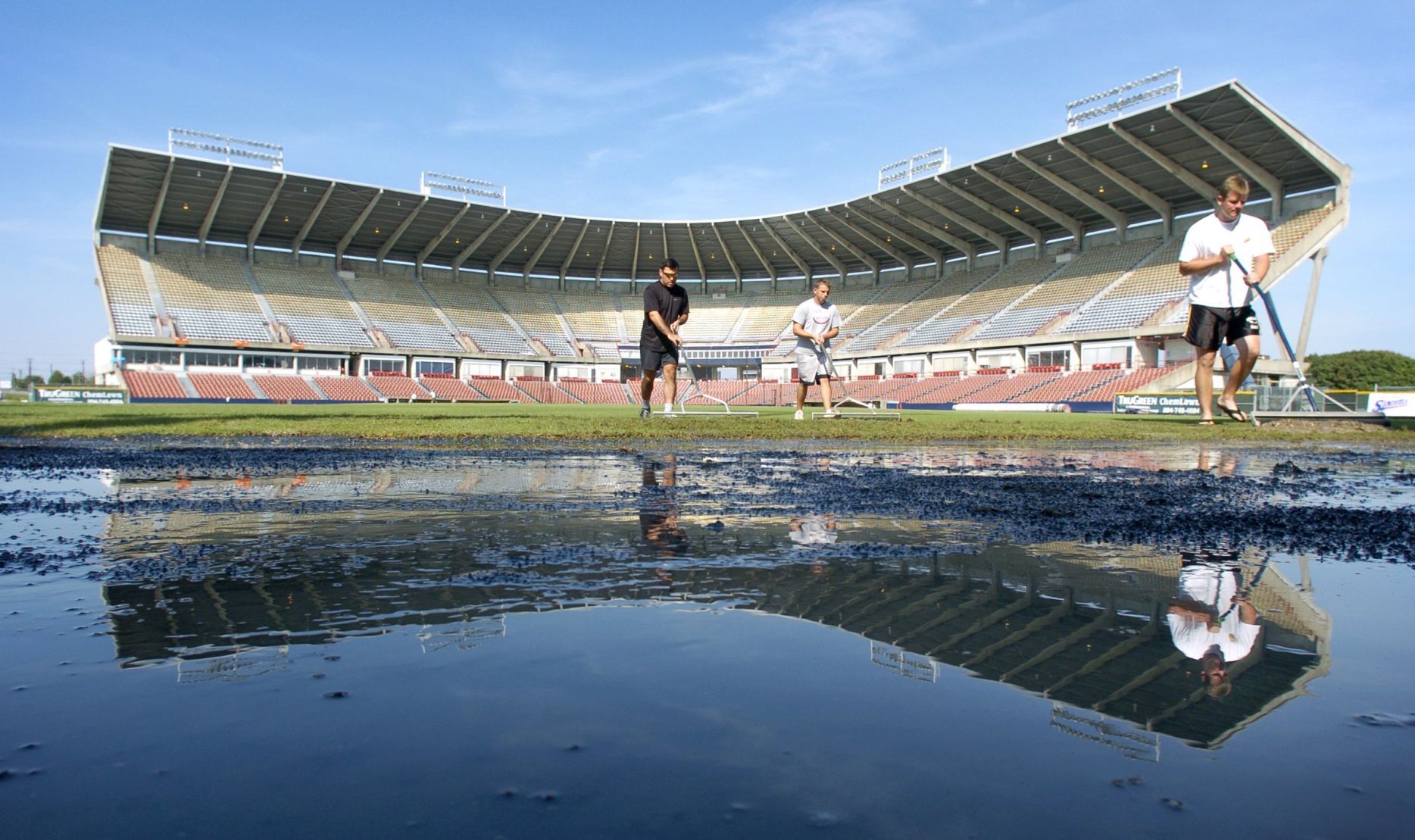
Poor field drainage forced game postponements and changes of venues in August. The R-Braves lost 15 home dates. No other International League club lost more than six.
In this file photo, Richmond Braves employees push water off The Diamond’s field in late August of 2004. The month set a Richmond record for rain: 16.3 inches.
2004
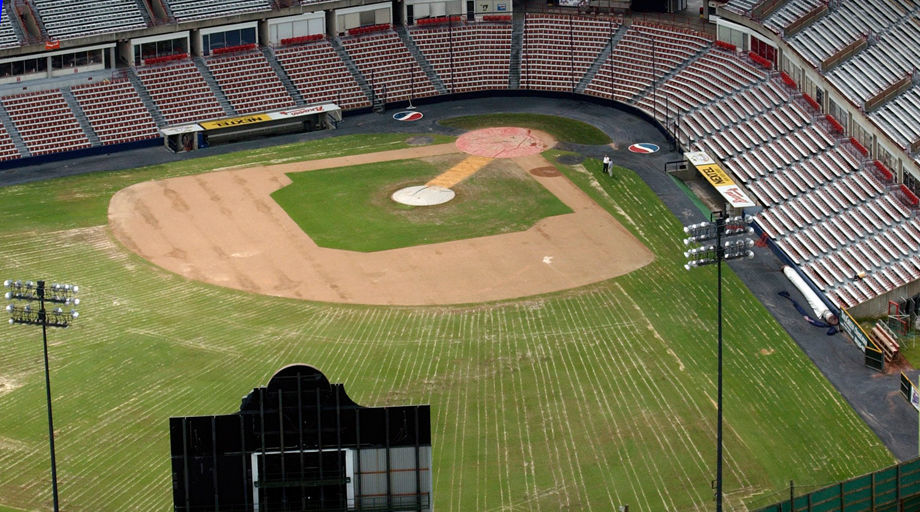
A state aviation official with development experience, Charles S. Macfarlane, proposed a $40 million, 7,500-seat ballpark for Mayo Island. One of Richmond's minor league teams, the Colts, played on Mayo Island 1921-41. Other informal proposals included a ballpark in Manchester, off Interstate 295 in Henrico County, and near Interstate 95, not far from The Diamond's location.
2005
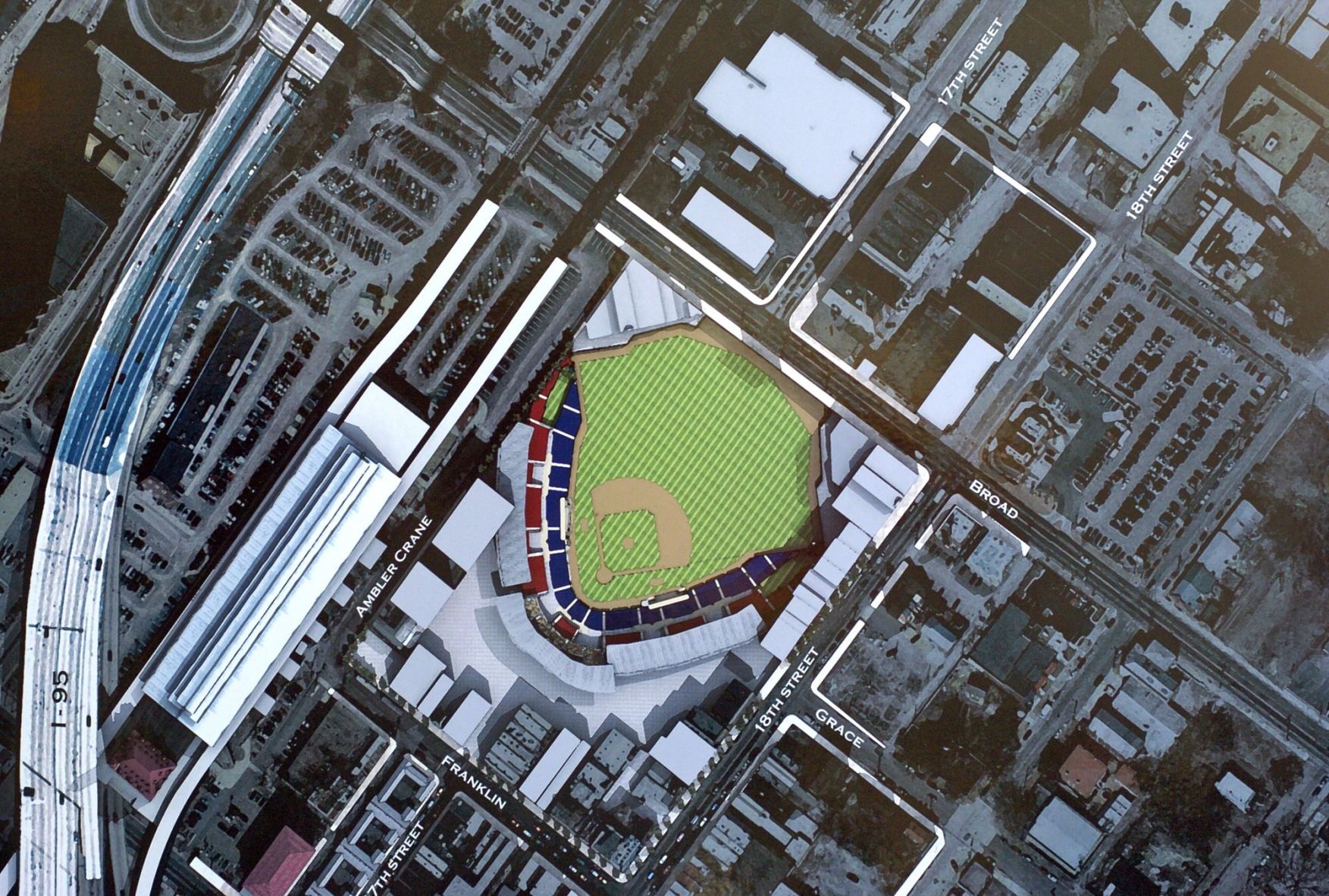
Braves and Global Development proposed $330 million live-work-play village, which would have included a ballpark, in Shockoe Bottom. The Diamond, reduced in size, would have been the centerpiece of a sportsplex for VCU baseball, a VCU tennis center and other venues for high school competition. The plan never gained traction.
The proposal, shown at a press conference at the Diamond on Feb. 10, 2005, is pictured in this file photo.
2006
Mayor L. Douglas Wilder proposed that a ballpark be built at the old Fulton Gas Works in the city's East End. That idea failed to gain even limited support.
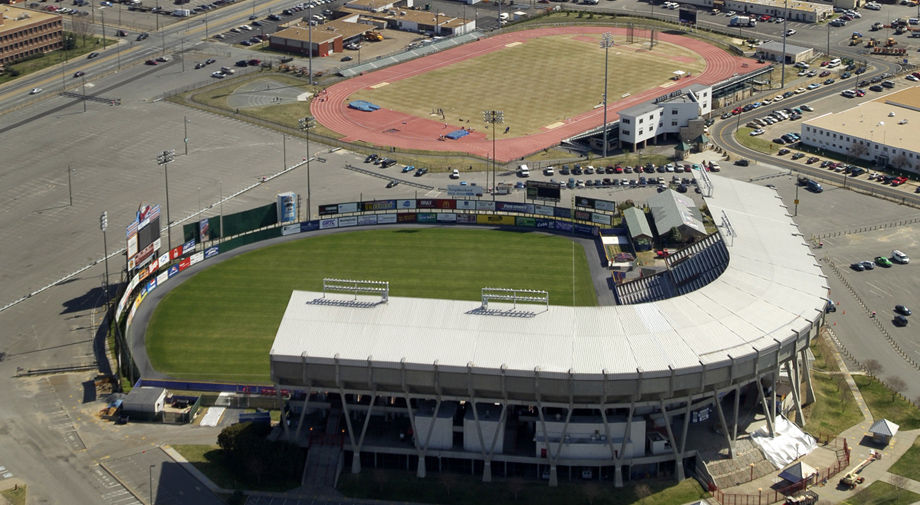
The Diamond, pictured in this file photo next to Sports Backers Stadium, would remain on Arthur Ashe Blvd.
2008
The Atlanta Braves announced that their Triple-A franchise was moving to Gwinnett County, Georgia, following the 2008 season, because of the organization's dissatisfaction with The Diamond. No Triple-A franchises were available to move to Richmond because of stadium contracts in other cities.
"If there were a facility (in Richmond) that the Atlanta Braves and the International League found acceptable, we would never have left," International Leagur President Randy Mobley said. "Leaving Richmond had zero to do with the market. In our humble opinion, we think Richmond is a fine baseball market."
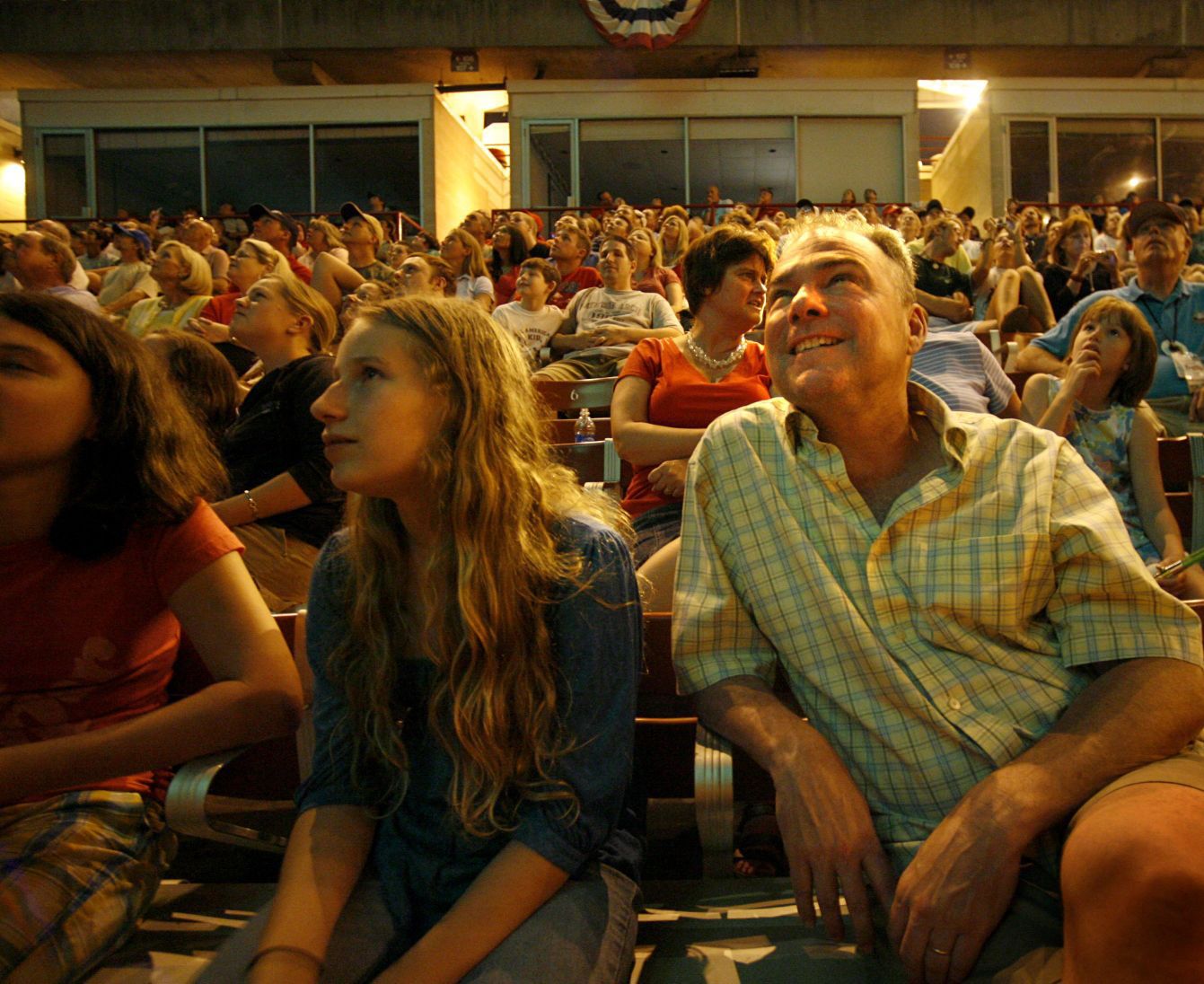
In this file photo, Virginia Gov. Tim Kaine and his family watch fireworks at the Diamond, July 4, 2008.
2008
Opening Day Partners wanted to transform The Diamond with a $28 million renovation that would have made it a venue for baseball and other community activities. The plan included removal of the concrete upper deck. It was not seriously considered.
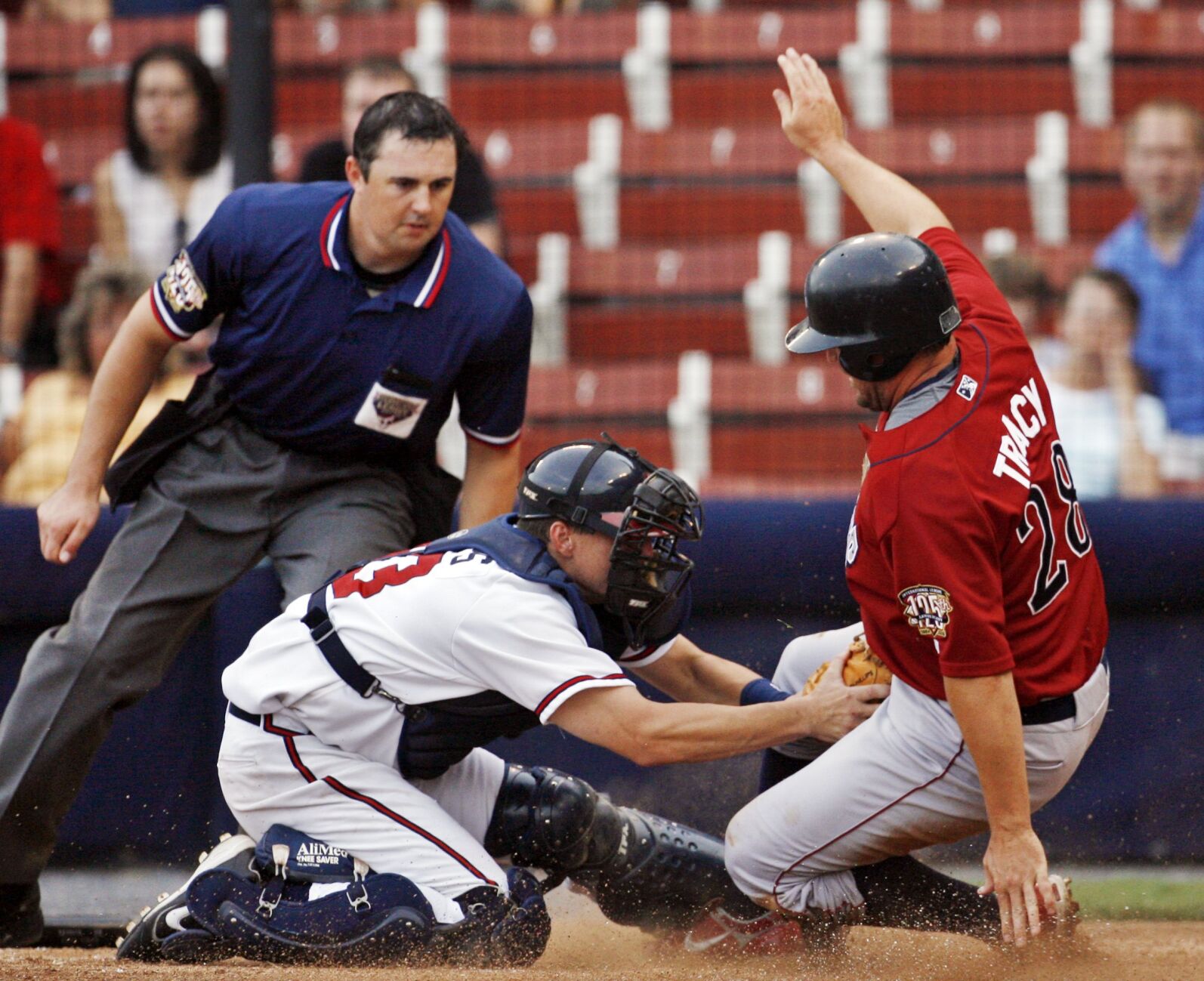
In this photo from the RTD archives, Richmond Braves catcher Jason Phillips tags Lehigh Valley's Andy Tracy at the Diamond during a July game in 2008.
2008
Local businessman Bryan Bostic led a group interested in buying a baseball franchise and moving it to Richmond. He also supported a $318 million downtown project, Shockoe Center, which included a $60 million ballpark. Highwoods Properties, behind the development project, withdrew the plan amid questions about its feasibility.
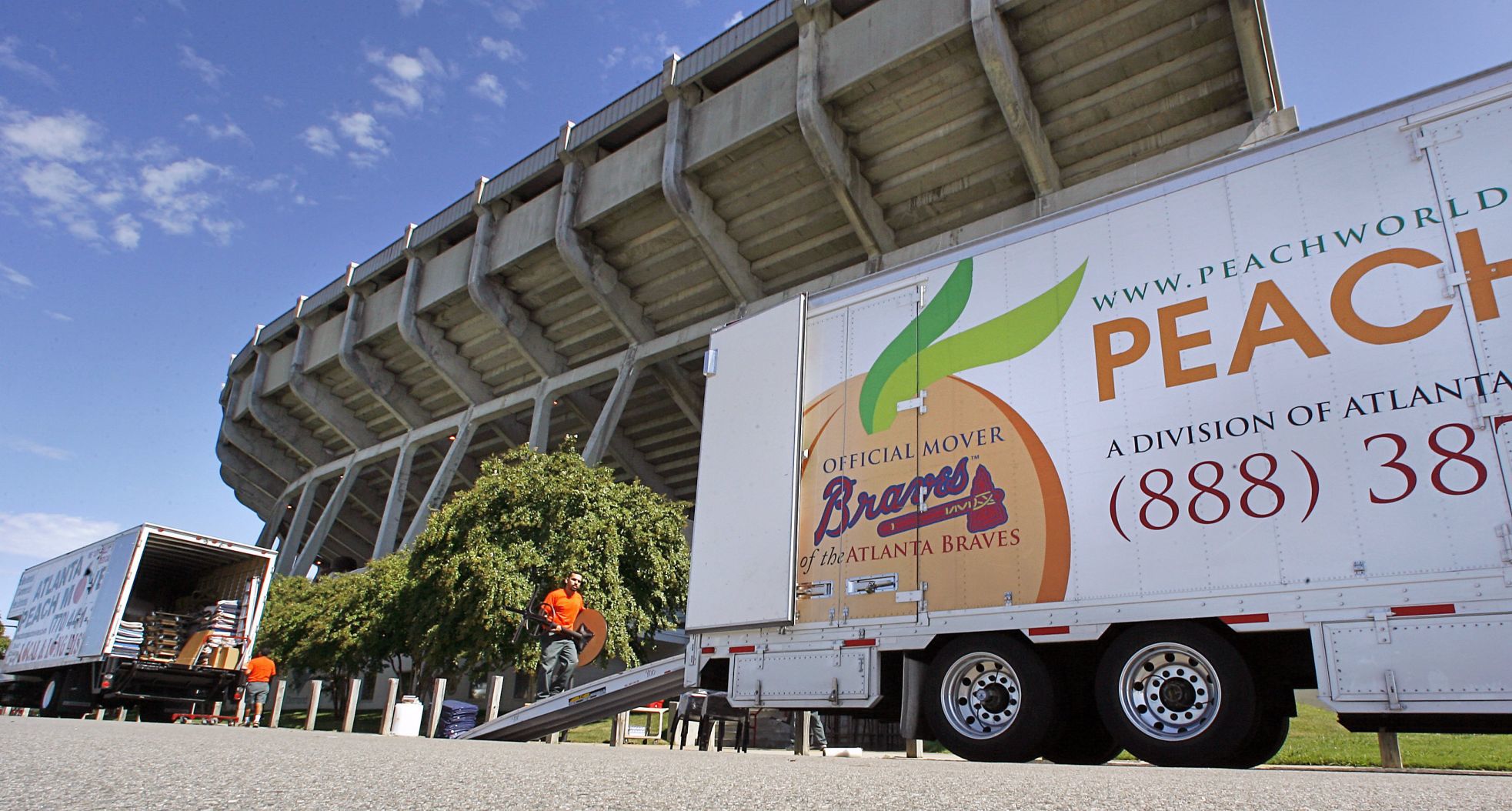
Braves’ front-office possessions were loaded onto trucks at The Diamond on Sept. 15, 2008 in this file photo.
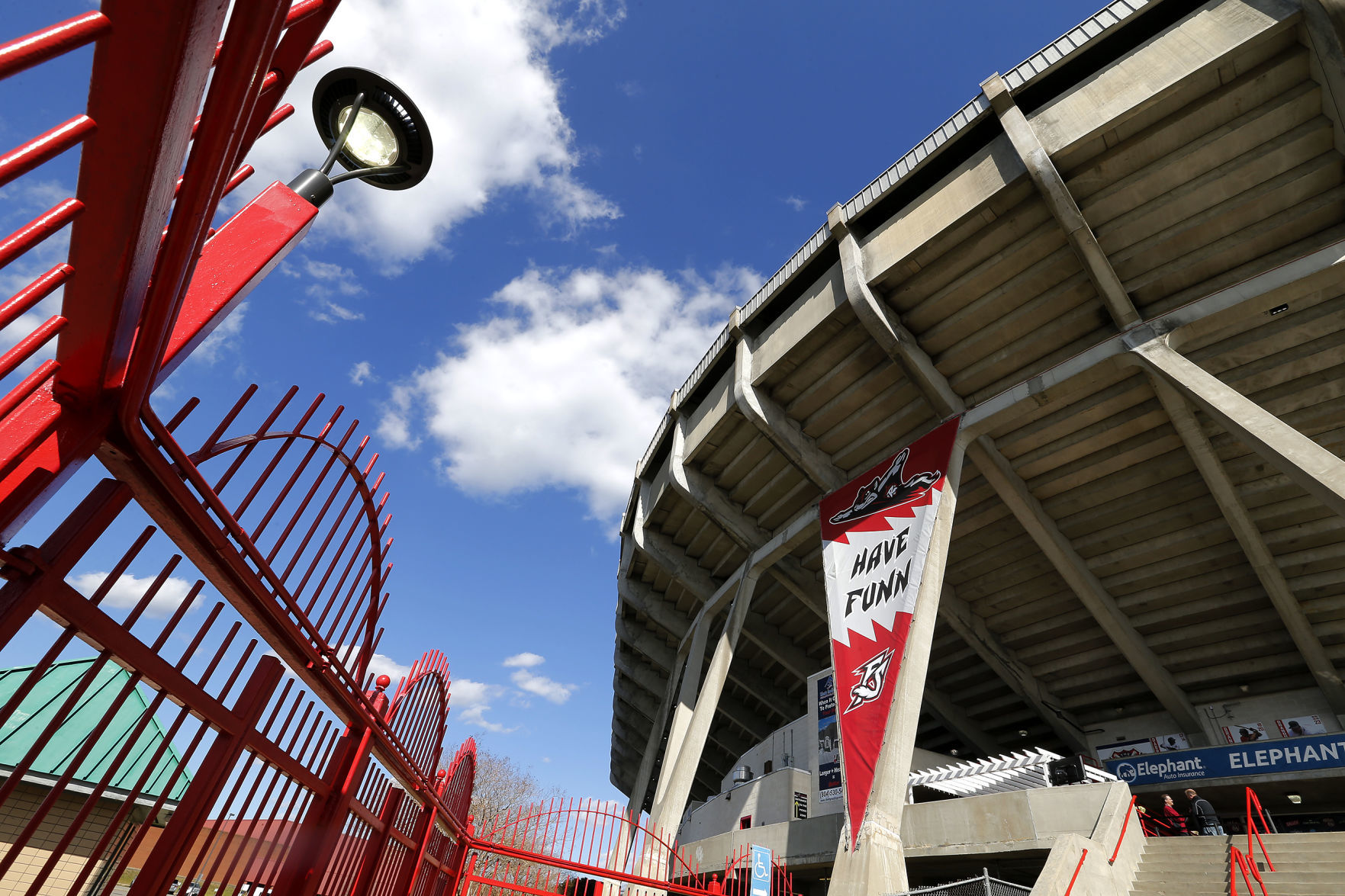
2009
Bostic's group, Richmond baseball Club LLC, failed to raise the money to purchase a Double-A franchise it had been pursuing (Connecticut, of the Eastern League).
2009
Eastern League President Joe McEacharn pledged to Mayor Dwight C. Jones that one of the Double-A league's 12 franchises would move to Richmond for the 2010 season. That turned out to be Connecticut, a San Francisco Giants' affiliate, which maintained its ownership group led by Lou DiBella.
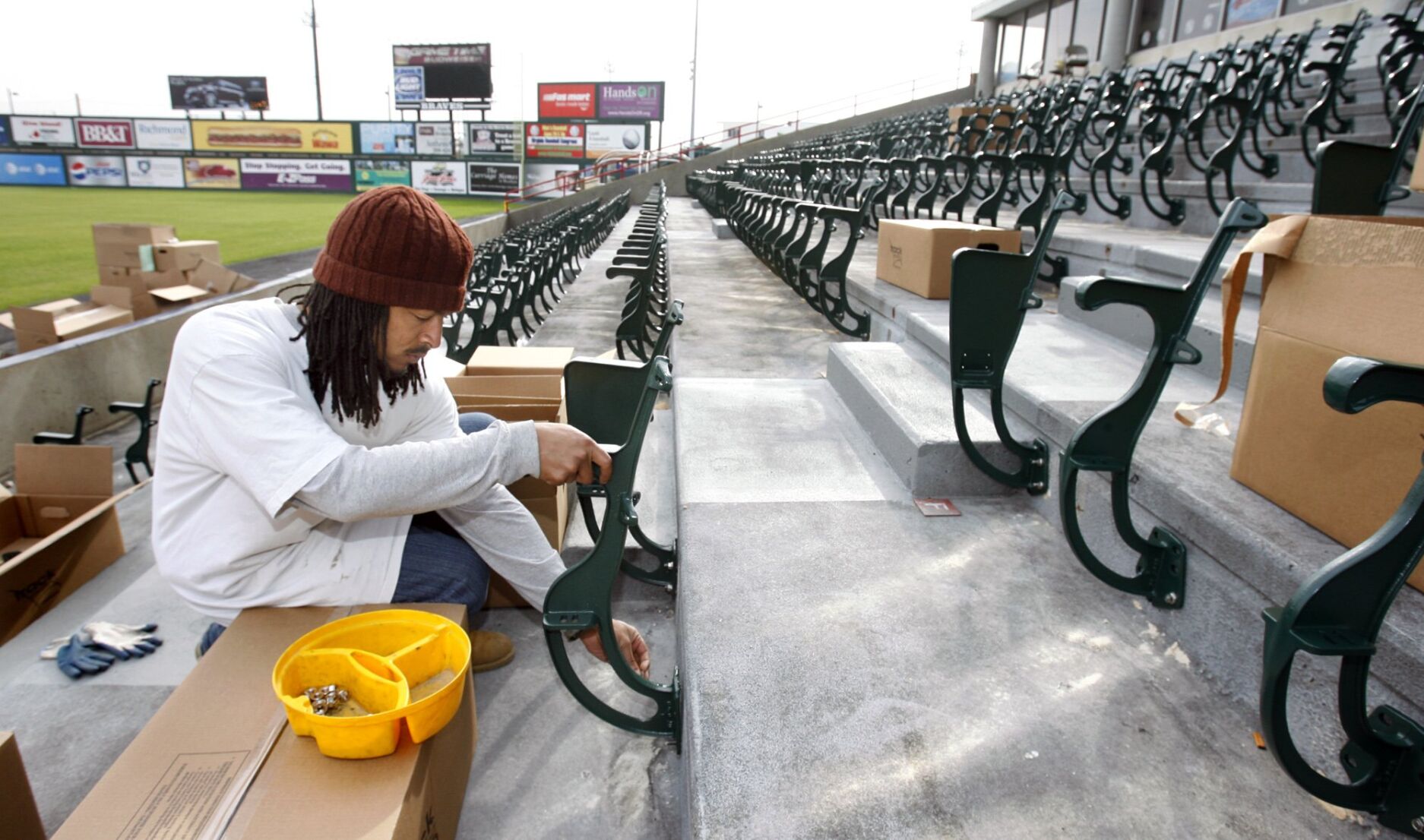
In this file photo, BJ Bradby installs a seat frame in the stands at The Diamond in 2009 in preparation for the 2010 season.
2009
Connecticut franchise officially relocated to Richmond in September. "Flying Squirrels" was the winner in a name-the-team contest.
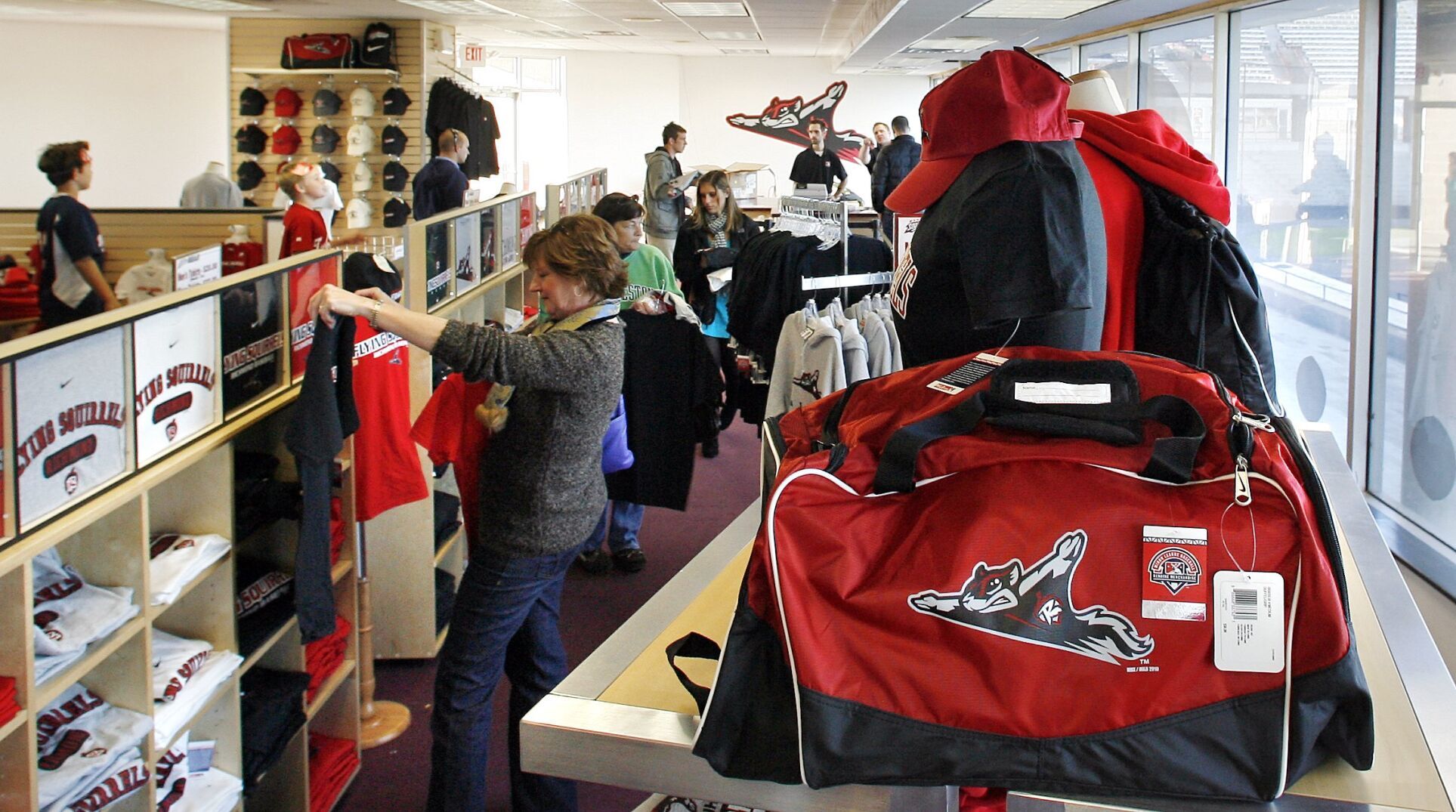
In this file photo, shoppers get their first looks at the Richmond Flying Squirrels merchandise store at The Diamond on Dec. 1, 2009.
2010
The Diamond's capacity was reduced from 12,134 to 9,560 with advertising banners covering upper-deck seating areas. The Flying Squirrels invested about $2 million in upgrades, including box seats in lower level, where aluminum bleachers had been.
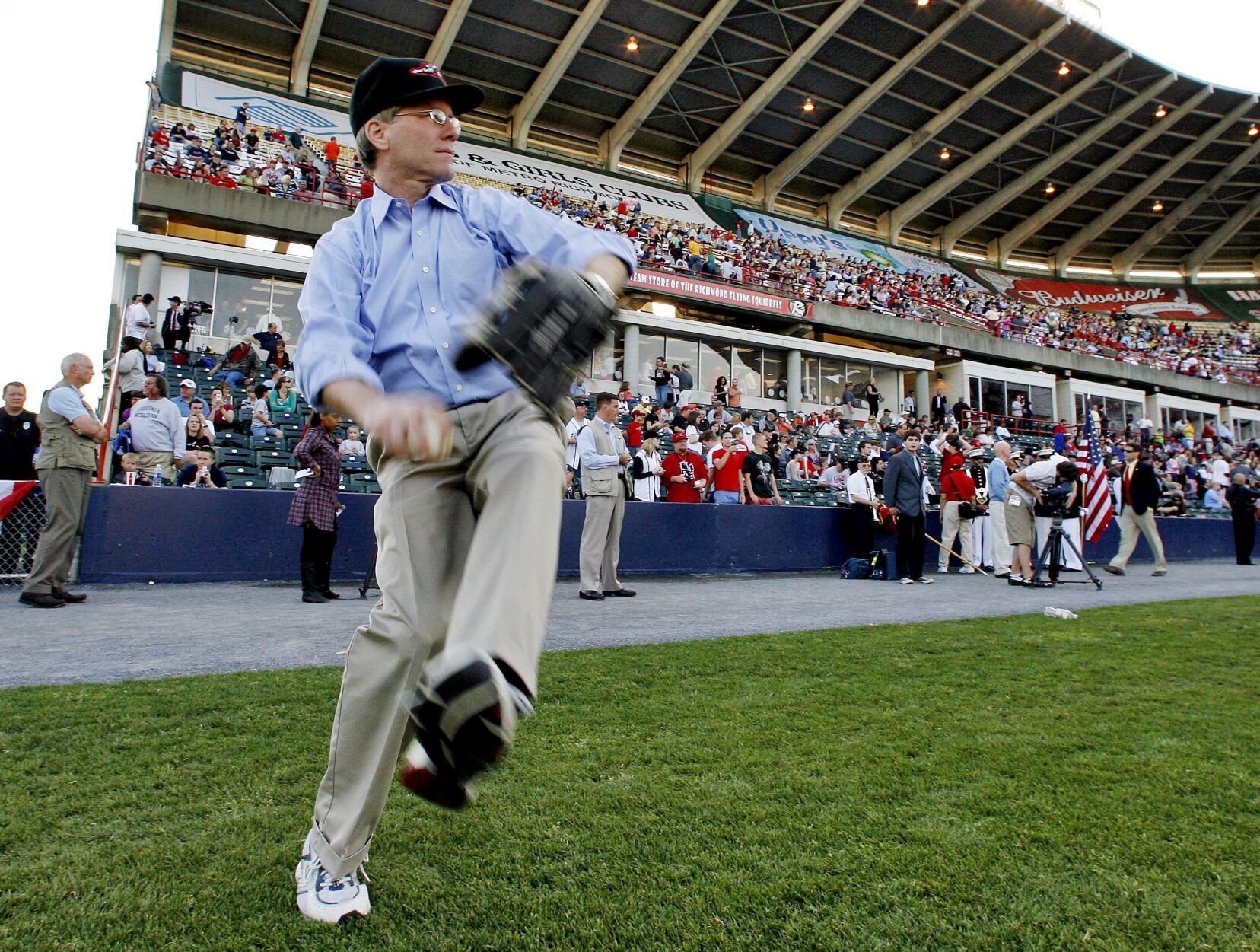
In this file photo, Gov. Bob McDonnell warms up for his first pitch before the Flying Squirrels’ debut at The Diamond. Advertising banners can be seen in the background.

2010
Richmond Flying Squirrels opened play at The Diamond, which Eastern League and club officials emphasized is not a "long-term solution" to Richmond's ballpark problem.
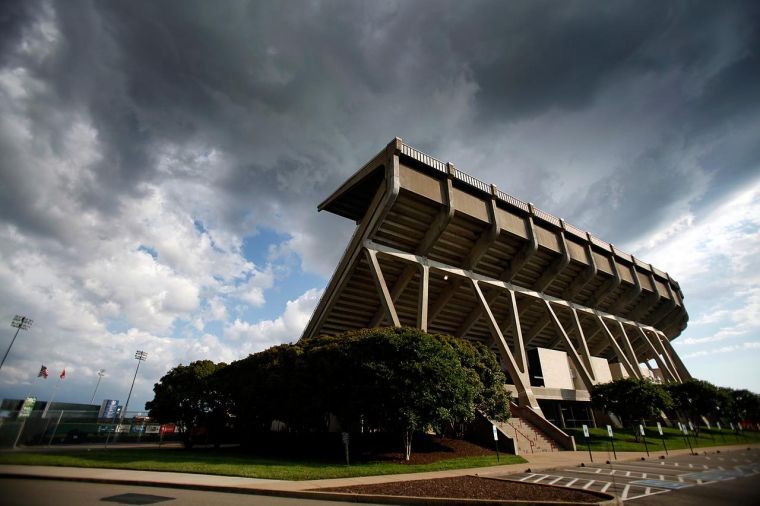
The Richmond Metropolitan Authority, which represented Richmond and the counties of Henrico and Chesterfield, owned and operated The Diamond. James L. Jenkins, chairman of the RMA's board of directors, said no specific location for a new ballpark had been agreed upon, but "I hope we have come to the conclusion that for the region, the area on the Boulevard is a good place to be. I believe we're going to have a new stadium there. But I think it's going to be five years away."
In this photo from the RTD archives, Umpires, Chris Hamner, Jordan Ferrell, Cory Hinga and managers, Steve Roadcap of Reading and Andy Skeels of Richmond meet during the home-opener of the Richmond Flying Squirrels at The Diamond in Richmond on April 15, 2010.
2011
Squirrels invested about $250,000 more in upgrades for The Diamond.
2012
Mayor Jones announced that the city would use interest rate savings from paying off old debts as debt service for the city's share of a new ballpark that's expected to cost about $50 million. The plan failed to mature, as do others in subsequent years.
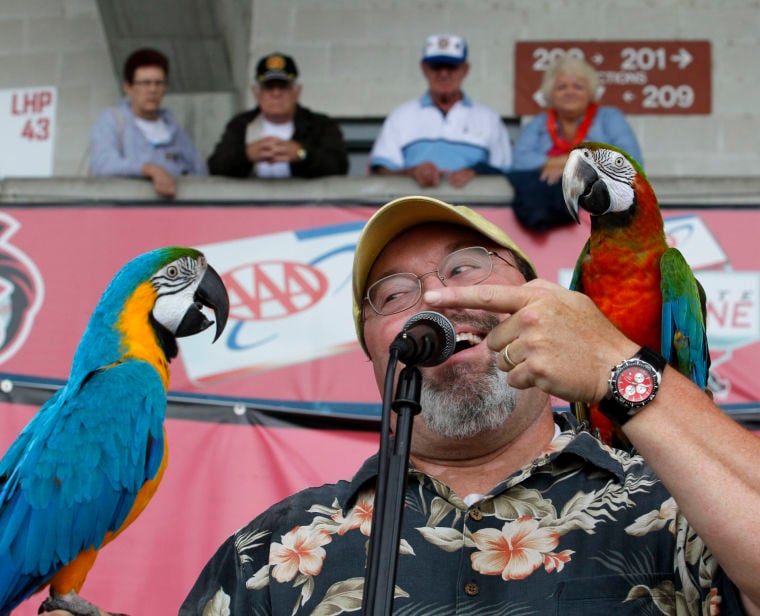
In this file photo, Sunny D , left, and Tangerine join B2B frontman Gary Snead prior to the Flying Squirrels' season finale at The Diamond, Sept. 3, 2012.
2016
In September, VCU and the Flying Squirrels signed a memorandum of understanding that stated VCU would take the lead on efforts to develop the new stadium. This plan, unlike many others, gained traction. VCU baseball shares The Diamond and would share the new ballpark.
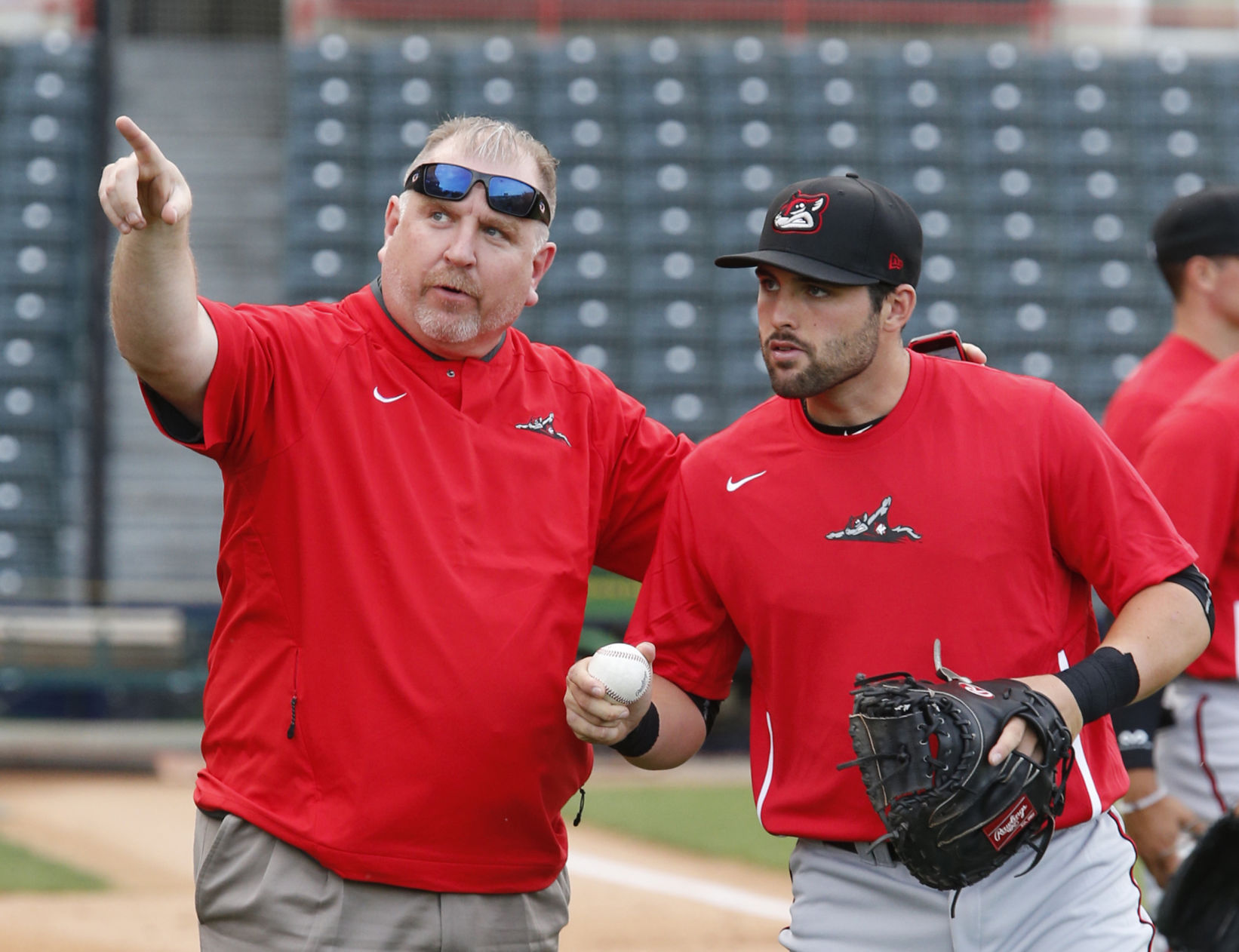
Squirrels executive Todd “Parney” Parnell and catcher Matt Winn are pictured in a file photo taken earlier that year.
2020
The projected stadium site moved to city land from the proposed VCU Athletics Village, and the project driver became the city. In the previous plan, VCU would have owned the ballpark and leased it to the Flying Squirrels. The Richmond City Council unanimously approved the Richmond 300 plan that included a ballpark.
2020
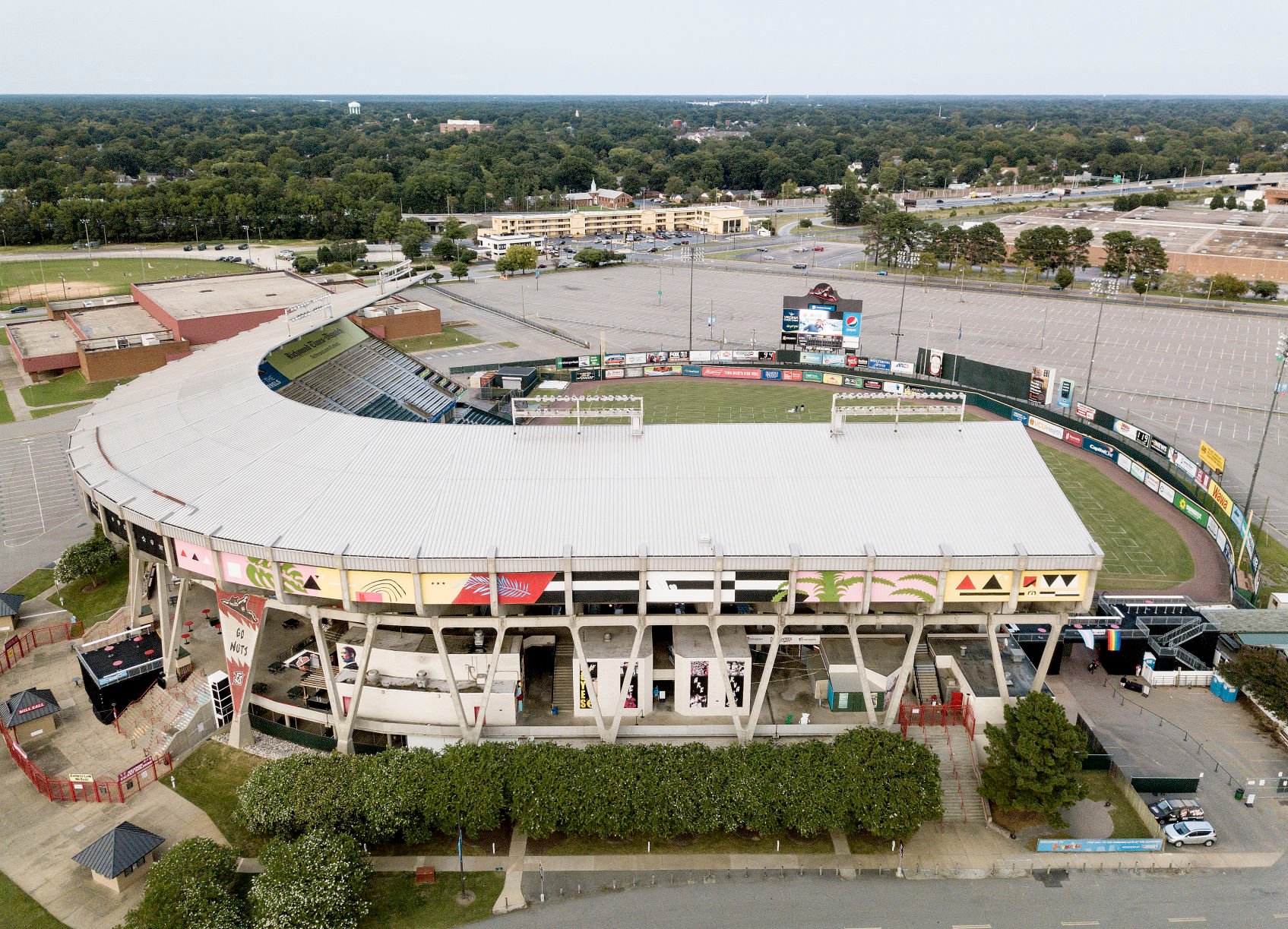
Major League Baseball took over control of the minor leagues, which had largely been run by a national headquarters in Florida and league offices. MLB reduced the number of minor league teams and instituted facility mandates. If a stadium failed to reach compliance by a deadline date, that community would risk losing its franchise, according to MLB. The Diamond is not close to compliance.
2023
2024
2024
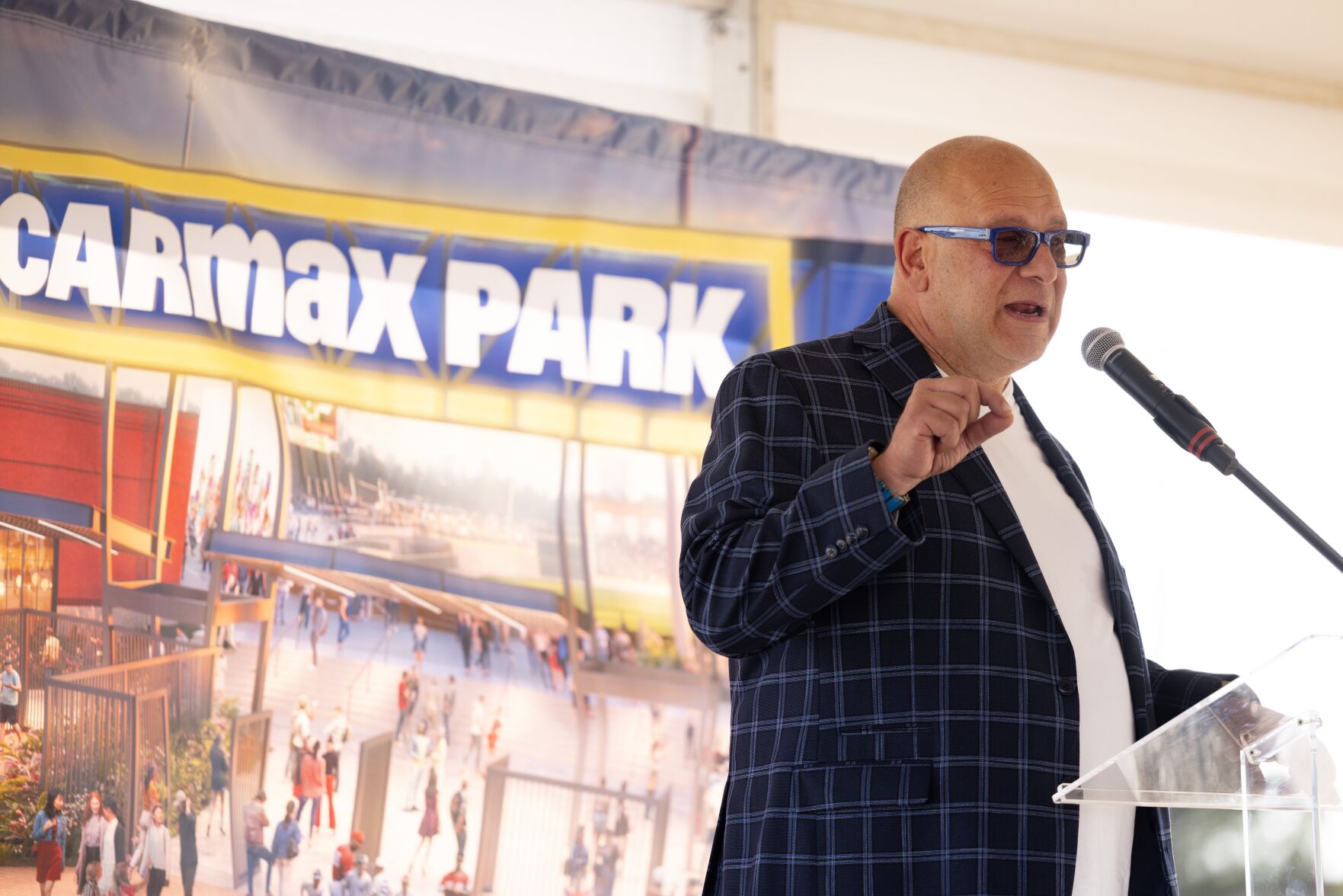
Managing General Partner of the Richmond Flying Squirrels Lou DiBella speaks at the groundbreaking for CarMax Park on September 6, 2024, in Richmond.