


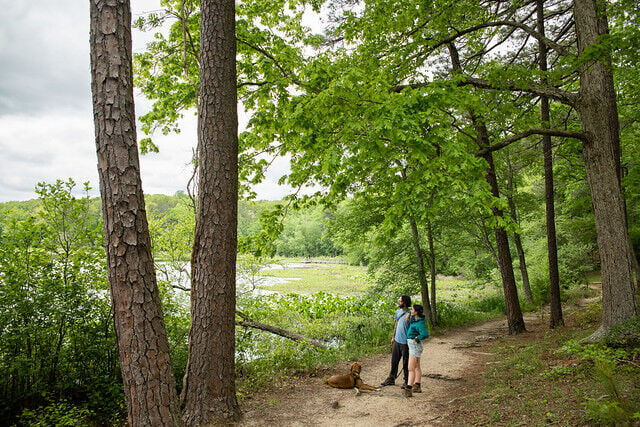
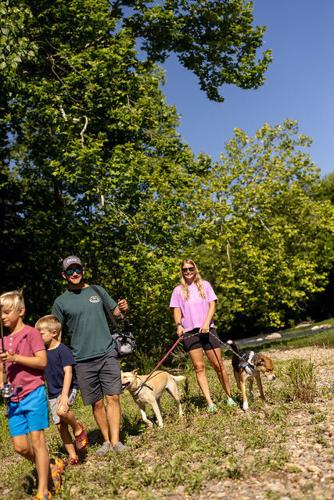

Bringing your furry friend along to Virginia's state parks can make outdoor adventures even more special. To ensure a safe, fun experience for everyone, including pets, owners and fellow visitors, consider these important tips.
1. Leash and supervision
Always keep pets on a leash no longer than 6 feet and under control. This is a system-wide requirement and helps prevent wildlife disturbance and accidents. Never leave pets unattended, whether in campsites or cabins. Violations, such as barking at night or damaging property, can lead to being asked to leave the park and to fines.
2. Know where your pet can go
Pets are welcome in all Virginia State Parks, including cabins, lodges and campgrounds, though a nightly pet fee applies for cabin stays. Pets are excluded from designated swimming beaches, public buildings such as visitor centers, restrooms and restaurants, and from yurts. At False Cape State Park, pets are allowed in the park but not allowed via the Back Bay National Wildlife Refuge entrance, so plan accordingly.
People are also reading…
3. Hydration and nutrition
Pack plenty of water and food, especially on long hikes. Keep pets cool and hydrated, and never leave them unattended in vehicles or tents, even in seemingly mild weather. Watch for signs of overheating, including heavy panting, lethargy, dizziness and restlessness.
4. Protection from heat, hot surfaces and cold surfaces
Virginia’s weather extremes can create surface conditions that are hazardous for pets year-round.
- Hot pavement burns: Surfaces can exceed 130 degrees even when the air temperature is in the 80s. Use the 7-second rule. If you can’t hold the back of your hand on the pavement for seven seconds, it’s too hot for your dog’s paws.
- Cold surfaces can also cause injury. In winter, frost, ice and frozen ground can lead to cracked or irritated paw pads. Prolonged exposure may cause frostbite, especially in smaller or thin-coated breeds.
- Check surface temperatures year-round. Whether it is summer heat or winter cold, always test the ground before walking your pet to ensure it is safe.
- Use protective paw gear. Consider dog boots or paw wax for hot pavement in summer and icy or frozen surfaces in winter.
- Choose safer walking times. In summer, walk at cooler hours. In winter, avoid early mornings when surfaces are most frozen.
5. Trail etiquette and respect for others
- Stay on marked trails to protect wildlife and plants and to keep your pet safe.
- Yield appropriately by stepping off to allow other hikers, bikers or horseback riders to pass safely.
- Manage barking and behavior, especially during quiet hours at campsites and cabins.
6. Watch your pet’s health
- Avoid exhaustion and heatstroke by ensuring rest breaks, shade and water.
- Be prepared for basic first aid. Know how to detect and handle paw burns, overheating and ticks.
- Know where to get help by identifying nearby veterinarians before you go.
With thoughtful planning and awareness, you and your pet can explore Virginia’s state parks together, creating lifelong memories of safe, shared adventures.


